
Platform: School of Journalism and New Media Studies, School of Studies, Indira Gandhi National Open University (IGNOU)
Duration: 1 Year
Certification: Yes, (Paid)
In today’s digital era, effective communication is as important as technical knowledge, especially in the development sector. As a doctoral scholar in Agricultural Extension and Communication, I wanted to strengthen my practical skills in journalism, reporting, media ethics, and digital communication. This led me to enrol in the Post Graduate Diploma in Journalism and Mass Communication (PGJMC) offered by the School of Journalism and New Media Studies, IGNOU, through the Open and Distance Learning (ODL) mode. I enrolled in July 2024 and completed the programme in October 2025 with 70.88% (First Division).
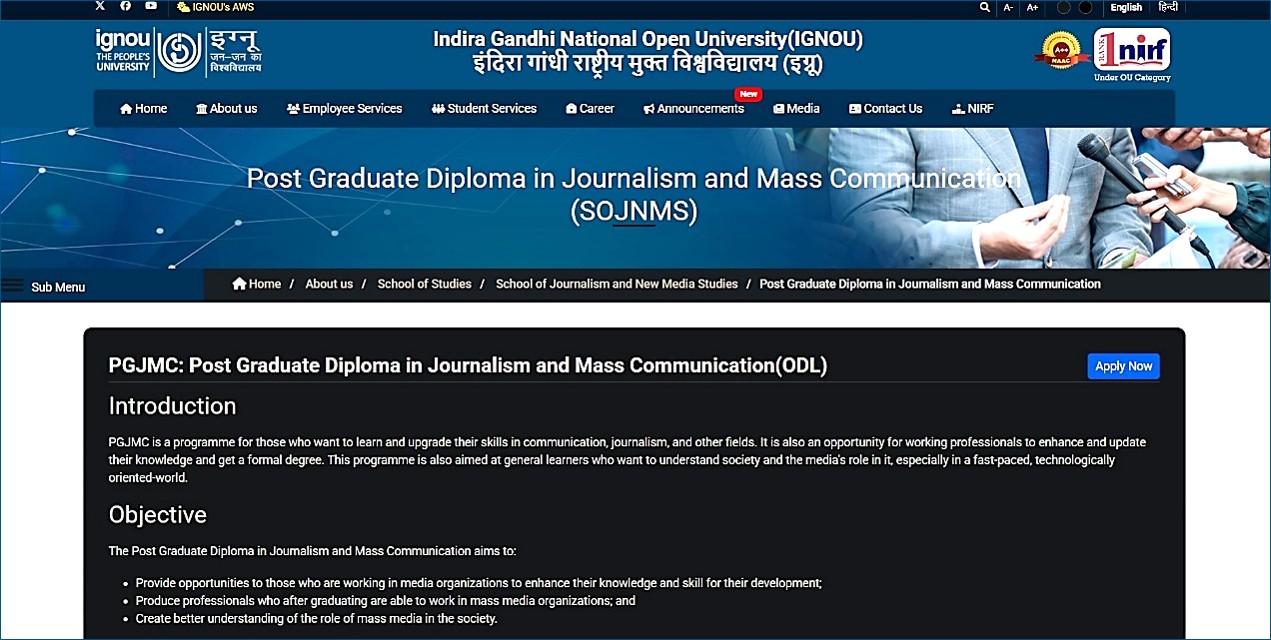
The one-year diploma is designed for graduates and working professionals interested in journalism, media, and communication. Offered in both English and Hindi, the programme covers subjects such as Introduction to Journalism and Mass Communication, Reporting Techniques, Writing and Editing for Print Media, Broadcast and Online Journalism, Media and Society, and Practical: Digital Media. Together, these courses provide a balanced understanding of media theory and practical journalism.
One of the programme’s greatest strengths was IGNOU’s learner-friendly Open and Distance Learning (ODL) system. Printed self-learning materials were delivered to my correspondence address. At the same time, the same resources were freely available online through eGyanKosh, complemented by recorded lectures from experienced faculty on YouTube, which were very helpful. The flexibility to choose and later transfer study centres was particularly valuable. This experience demonstrated IGNOU’s commitment to providing a flexible, learner-centric system.
The practical component of PGJMC proved to be the most rewarding aspect of the programme. PGJMC required learners to produce actual media content. Although I generally devoted two to three hours every week to regular study, practical submissions required more than four hours of focused work each day for nearly two weeks, while examination preparation typically involved twelve to fifteen days of dedicated revision.
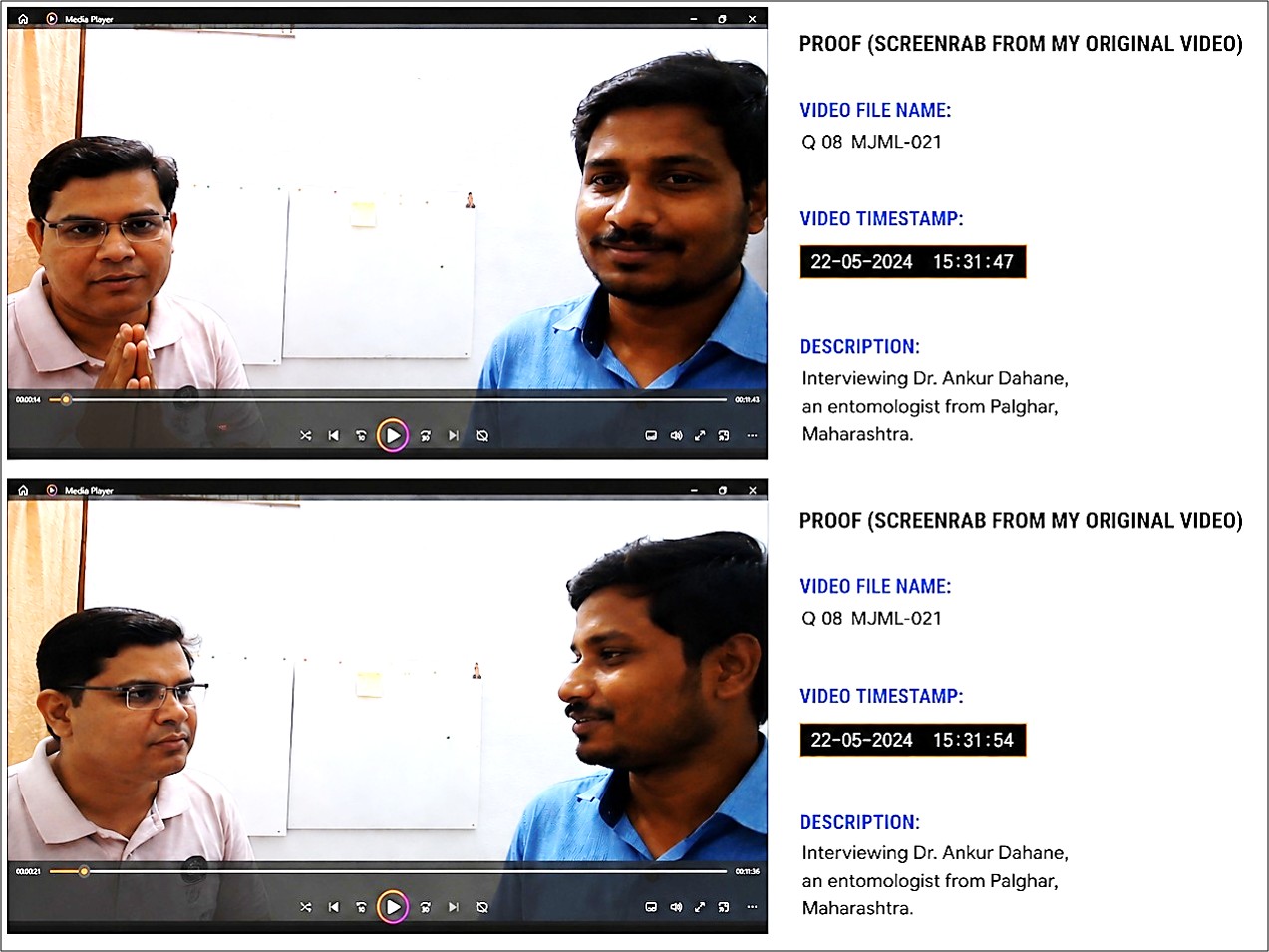
Among the practical assignments, the most memorable was conducting my first professional interview of Dr Ankur Dahane. Preparing interview questions, conducting the interview, and presenting it in journalistic format taught me how to communicate systematically, ask meaningful questions, and present information objectively-skills that continue to benefit my professional work.
The course also provided opportunities to create diverse media products. I developed a television news feature on the contemporary issue of “Water Crisis,” prepared a radio morning news bulletin for Navsari featuring local news, produced a field-visit vlog titled “Lives,” hosted an interview programme named “Voices of Change,” and created a special report under the title “Bihar Say” focusing on the impact of contract farming on farmers in my native village, Patut, in Bihar’s Patna district. Additionally, I designed sample news webpages covering business, lifestyle, national affairs, and sports, prepared original photographs for practical evaluation, and created video thumbnails and cover pages. These assignments simulated real newsroom activities and significantly improved my confidence in content creation, interviewing, script writing, visual presentation, and digital storytelling.
Among all the theory courses, Broadcast and Online Journalism (MJM-023) stood out as the most relevant to my professional interests. The knowledge gained from this course now supports my work in digital agricultural extension initiatives, my volunteer activities with AESA, and my current responsibilities in communicating research outputs, promoting institutional activities, and engaging wider audiences through digital platforms. Equally valuable was learning how journalistic writing differs from academic writing, particularly in developing concise news reports, writing effective headlines, using bylines appropriately, verifying facts, and distinguishing credible news from rumours.
The Media and Society (MJM-124) course appeared lengthy and could benefit from revision to include recent developments in digital media. My experience with the study centre was also inconsistent, as email queries and phone calls often went unanswered despite repeated attempts. Greater responsiveness from study centres would substantially improve learner support. Furthermore, although the programme included counselling sessions, there was almost no interaction among learners. Regular virtual doubt-clearing sessions, an active online discussion forum, frequently asked questions (FAQs), and sample practical reports would greatly benefit students, especially those entering journalism from non-media backgrounds.
Overall, PGJMC fulfilled my expectations, and I would recommend this diploma, as it also has an added advantage that interested learners can continue their academic journey by pursuing the M.A. in Journalism and Mass Communication within three years of completing the diploma.
 Dr Basu Anand is a Research Assistant at the School of Agro and Rural Technology, IIT Guwahati. He is also an AESA Volunteer. His work focuses on research, data analysis, and technical writing, with active contributions to academic outreach, science communication, and volunteer initiatives. He can be reached at basuanand.edu@gmail.com
Thanks to Dr Basu Anand for providing a review on Journalism course offered by IGNOU. What I notice is that there are ample opportunities for the people who wish to learn and improve their capacities. It totally depends upon the individual concerned. Our system is neutral and as of now we don’t need to improve our capacities to effectively dela with the existing or future challenges. Our career advancement unfortunately does not depend up on the participation in skill development programmes.
Fortunately, many youngsters like Dr Basu out of their own interest are participating in capacity development programmes being offered by various institutions like IGNOU, MANAGE etc. I wish our academic institutions encourage the participation of extension personnel in such programmes