
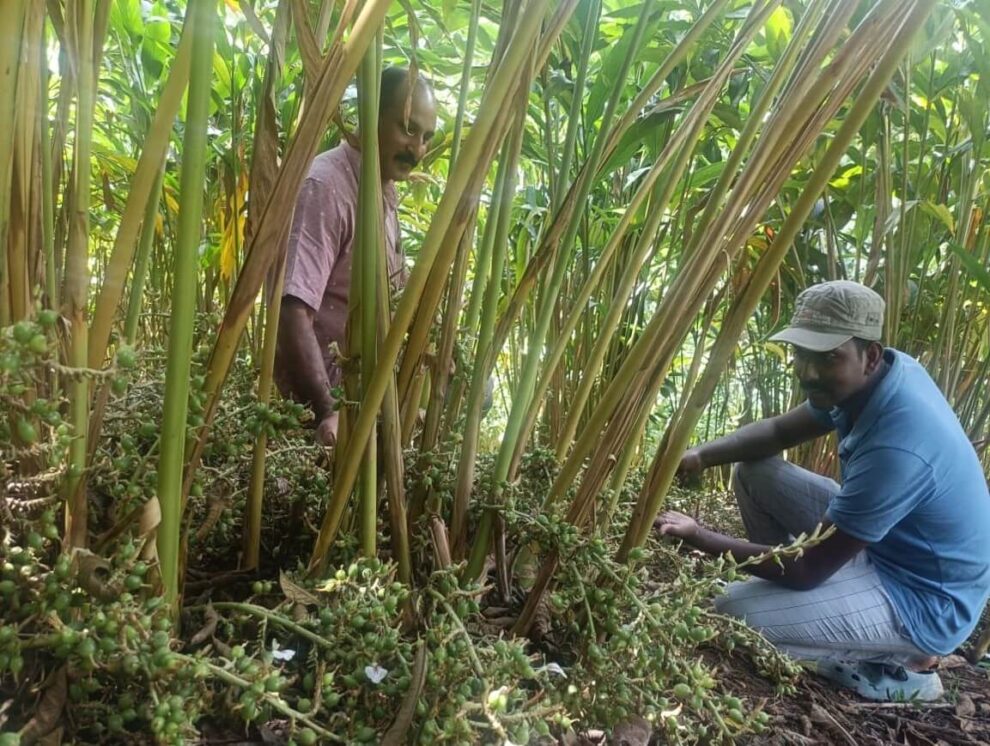
In this blog, Smija P K and Sunil V G discuss the importance of intergenerational knowledge transfer and why extension should facilitate dialogue, joint experimentation and shared decision-making within farming families.
CONTEXT
Every farm carries knowledge that no manual fully records: which slope dries first, how much shade a crop can bear, which variety survives a bad year, when labour must be booked etc. Much of it is learned by working alongside parents, and its passage from one generation to the next, intergenerational knowledge transfer (IKT), shapes whether farms remain productive, sustainable and resilient. In Bali’s Subak rice systems, IKT emerged as the most sensitive attribute of the social dimension of farm sustainability. Yet this transfer is under strain currently. Among the Toto community of West Bengal, changing aspirations, formal education and modernisation have opened a generational gap in farming knowledge and displaced practices such as seed preservation and water conservation. When transmission thins, farms lose the very tacit competence that new technologies and certification regimes demand.
IKT is not only about preserving the past. Younger members often bring knowledge of their own. Young farmers also act as digital intermediaries for older relatives, and Information and Communication Technologies (ICTs) strengthens their capacity most when it builds on learning and social capital rather than replacing them. It is this blending of traditional and modern knowledge that makes farming successful, sustainable, resilient and efficient. In this blog, we explore how IKT happens in the cardamom sector of Kerala.
FIELD WORK IN INDIA’S SMALL CARDAMOM BELT
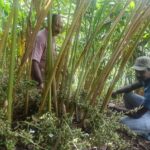
Idukki district, in the Western Ghats, is the heart of India’s small cardamom (Elettaria cardamomum) production. Cardamom here is grown under forest shade in the Cardamom Hill Reserves, supporting a dense local economy comprising growers, labourers, nurseries, input dealers and traders. As an indication of scale, the World Bank-assisted KERA project, implemented with the Spices Board, plans to reach 22,000 small and marginal cardamom growers in Idukki.
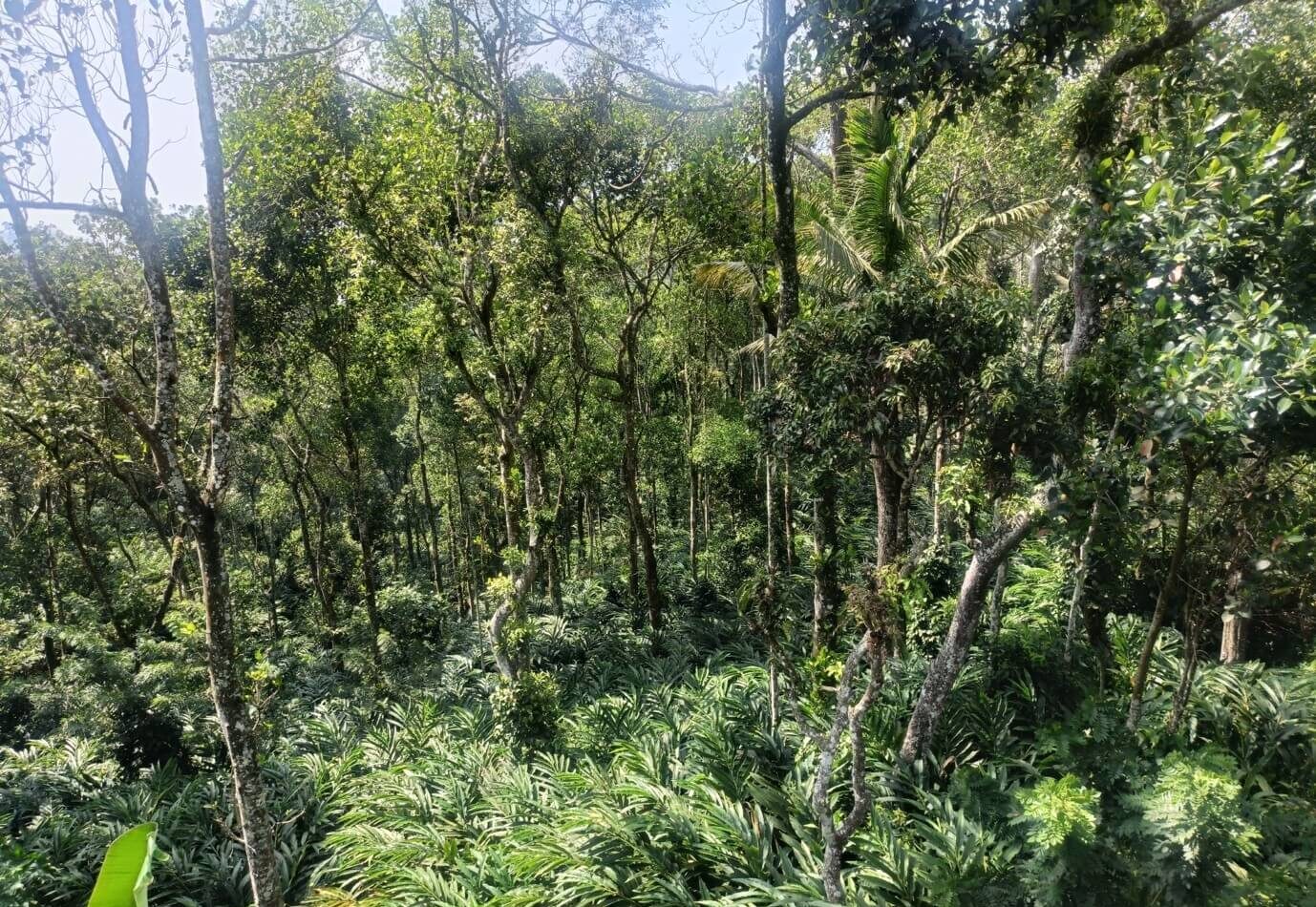
In this research, we examine how social network characteristics influence area expansion decisions among small cardamom growers. While compiling field notes from a survey across ten panchayats of Idukki in early 2026, we noticed something the survey had not set out to capture: how farming knowledge is generated, shared and modified across generations within families.
The responses from in-depth interviews of small cardamom growers do not suggest a simple transfer-versus-no-transfer story. It points instead to a continuum. In some households, parents and children farm together and knowledge is embedded in daily practice. In others, the next generation combines parental knowledge with digital, professional and market-based information. In still others, the family link remains important even when the younger generation runs a separate holding or moves into another part of the value chain.
FORMS OF INTERGENERATIONAL ENGAGEMENT
The three forms of intergenerational engagement that emerged from the field are active co-farming, hybrid transfer and continuity, and reconfigured succession.
Active co-farming: knowledge exchanged through everyday work
In the first group, parents and younger family members remain closely involved in the same farm. Knowledge moves through everyday decisions, observation, labour and joint management, with each generation contributing its own strengths.
Abby Joe, a BSc (Hons) in Agriculture graduate, returned to farming after completing his degree. He explained:
“When I came back home after my BSc (Hons) Agriculture, I could see that my father’s close relatives had progressed so well financially through cardamom farming. My father couldn’t, because he was working and there was no one to help him manage plots in distant places. So I decided to stay back and help him.”
His return was prompted not by a lack of knowledge, but by a lack of hands and time. His father brings experience of the land, while Abby brings labour, management and formal agricultural training.
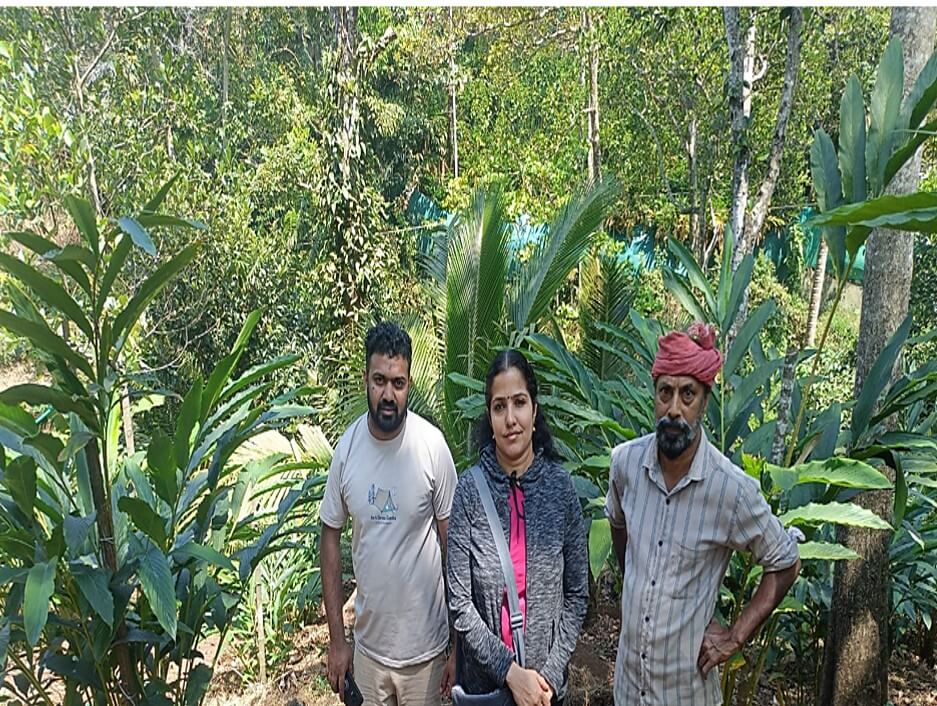
Suresh K S (65) and his son Saneesh farm together in Manjapara, where cardamom grows alongside coffee, nutmeg, pepper, cocoa and 150 bee colonies. Saneesh, an irrigation professional, updates his father’s traditional knowledge with information from his own network. Operations are closely monitored, fertilisers are ordered online and the farm holds GAP certification. New practices enter through the son but take root because they are absorbed into the father’s way of farming—the ‘idea seed’ at work.
Aswathy V G (36) manages 60 cents of cardamom with the support of her 65-year-old father and her husband. Her father’s knowledge of slope, shade, varieties and labour forms the quiet backbone of the farm, while she is its manager. She finds the work deeply rewarding:
“It is a very fulfilling feeling to earn a good sum of money through farming. Most of the operations are woman-friendly.”
Her case shows that IKT flows to daughters as well as sons, and that family support can make farming a viable and satisfying livelihood for women.
On smaller holdings, continuity often rests on a quiet division of labour between generations. Surendran (68) and his son Arun farm a hilltop holding at Urumbikkara in Kokkayar, where tea, coffee, rubber and 75 cents of newer cardamom share land that faces moisture stress and poor road access; succession holds because the son has chosen to stay.
Hybrid transfer and continuity: inherited knowledge meets new knowledge
In other households, the younger generation extends the family knowledge base through digital media, formal education, professional networks, business experience or new information sources. In some cases, continuity also survives through farm routines and infrastructure even after direct intergenerational exchange has changed.
James (78) and his son Jins grow cardamom on two acres of sloping land in Peruvanthanam, an area not traditionally known for the crop, and plan to expand to five acres. James learned from fellow farmers in Kattappana; Jins learns largely from YouTube and Facebook. The son is not simply reproducing his father’s knowledge; he is bringing a new information ecosystem to the family farm and adding new income streams such as agroecotourism.
Nithin studied accounting in London and returned to join his father’s farming in Thopramkudy. Alongside the farm, he opened a fertiliser shop. His training brings a business and financial lens to both the farm and the shop, while the shop counter connects the family to input markets and neighbouring farmers who come for advice.
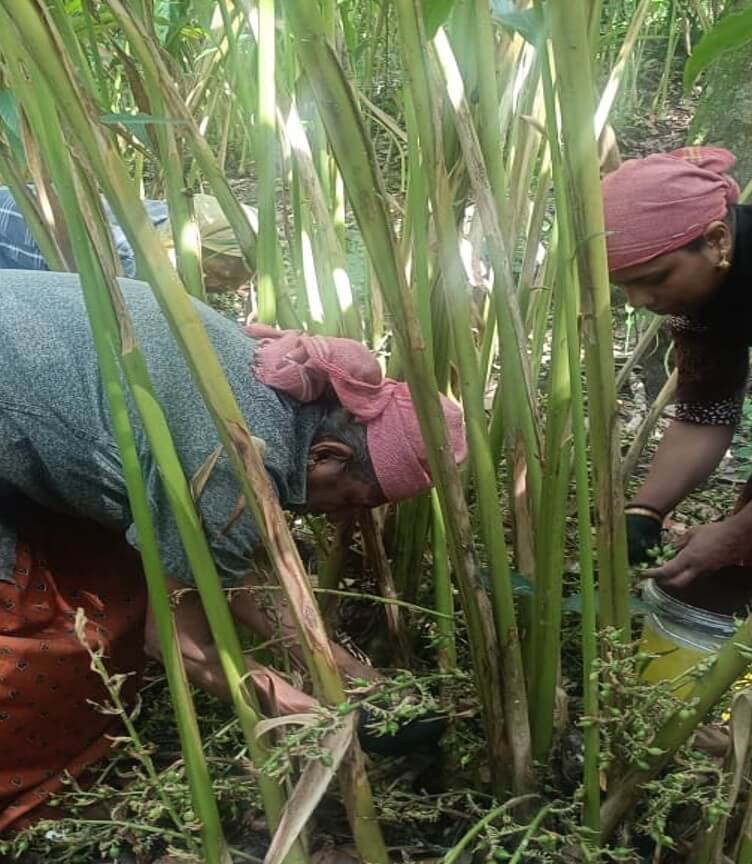
In Vandiperiyar, Ganesh Kumar bought 1.5 acres in 2021, converted the holding from coffee to cardamom, and plans to expand it to two acres. He learned farming from his parents, his mother having once worked as a labourer on cardamom estates, and they still run the daily operations while he earns ITI daily wages. Spices Board classes and a cardamom expert’s YouTube channel now add to the knowledge he received from his parents.
In Kumily, Mr. Varghese Yohannan (38), a Best Farmer Award recipient, runs a system that integrates Holstein Friesian cattle, three biogas units and Super Napier fodder, with cow urine and cowshed washings applied to the cardamom every month. His father, who died about ten years ago, helped build this integrated cardamom, rice and livestock system. Here, knowledge persists in the farm’s infrastructure and routines long after direct exchange between the generations has ended.
Larger expansions often ran through return migration and the input trade. Siju Thomas (41) learned cardamom cultivation from his father, Cheriyan P K (65), whose four decades of experience came in turn from his own father and brothers. After four years in Kuwait, Siju returned to Idukki in 2013 as prices rose, built a ten-acre holding along the Kumily–Attappallam route, opened a fertiliser business and, in 2016, founded Kurisumoottil Agrochemical Private Limited. His knowledge widened through his interactions with Dr Murugan, a Scientist at the Cardamom Research Station (Kerala Agricultural University) engagement in social-media networks and consultancy work for the Kerala Forest Development Corporation. That knowledge now flows back to the family: Siju advises his father and brother on nutrient management and sustainable irrigation.
Reconfigured succession: new pathways beyond the shared farm
Succession does not always mean taking over the same holding and farming in the same way. Some younger members establish separate holdings, enter input or trading businesses, or redirect inherited assets towards new enterprises.
Siby Abraham (55) farms owned and leased land in Udumpanchola–Mankulam, while his son Subhojith(28) independently cultivates eight leased acres in Elappara. Subhojith has developed an eggshell-based organic fertiliser, runs a planting-material nursery and uses his network to find land for lease. Succession here takes the form of entrepreneurial independence rather than shared cultivation, widening the ‘opportunity space’ when land is difficult to inherit.
Lijish Joshy(23) studied physical and futures trading and used that training to start a spice company, deliberately seeking income beyond farming. Knowledge of the crop, grounded in a farming region, is carried forward into trading, where price movements, futures markets and buyers become part of the next generation’s knowledge base. He stays connected to cardamom while moving up the value chain.
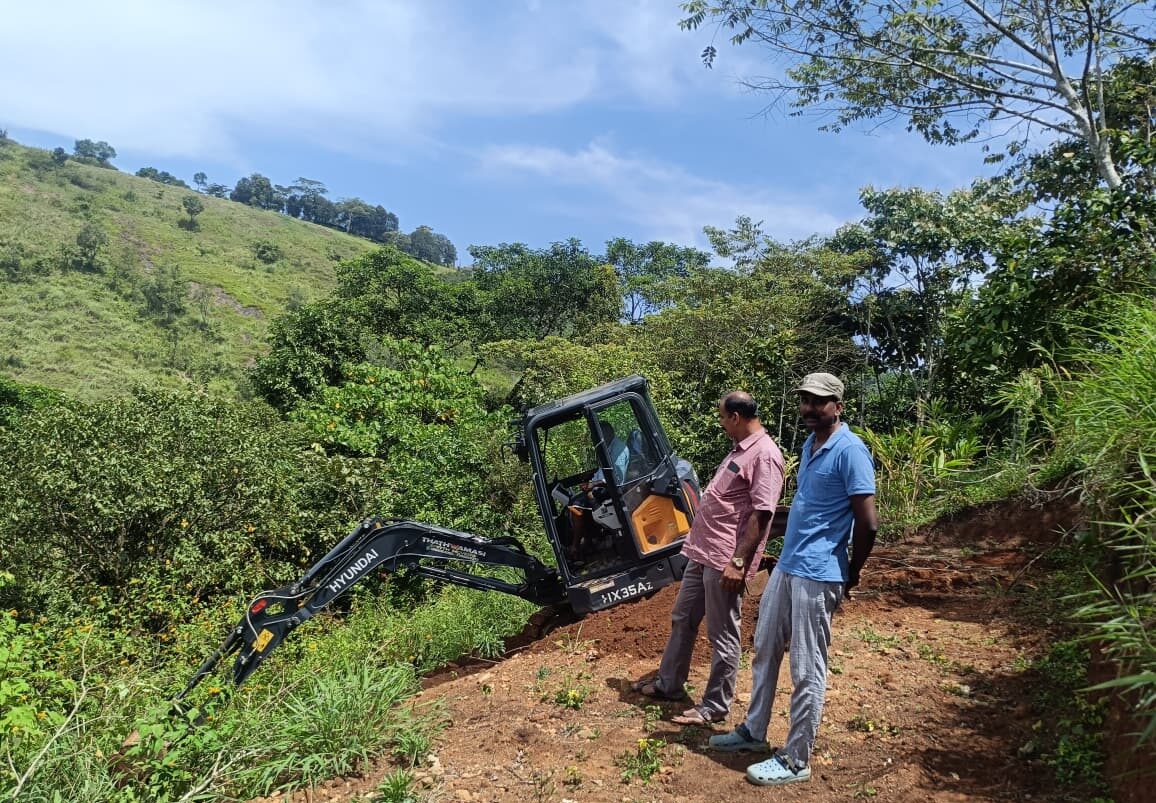
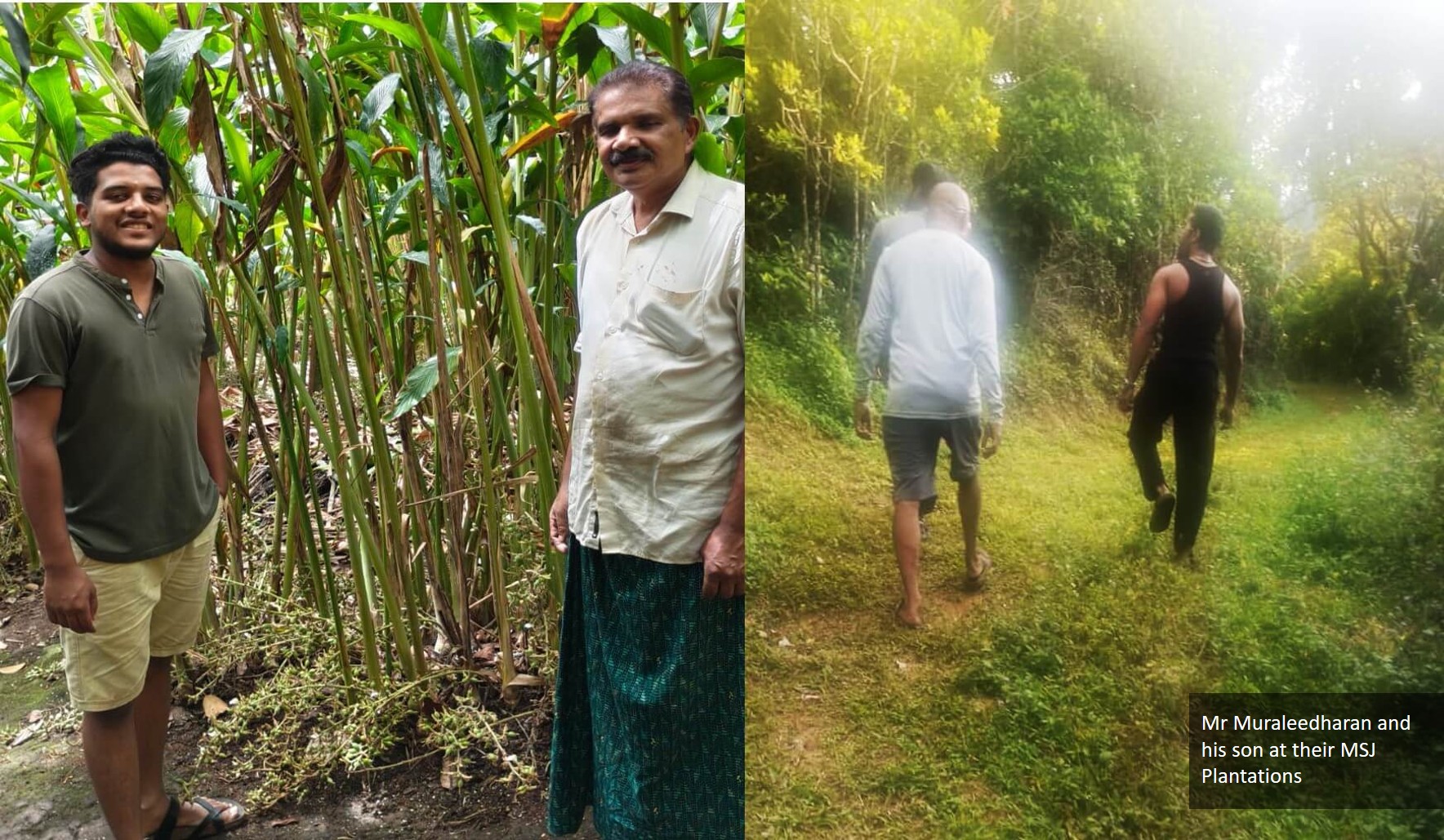
At MSJ Plantations, a father–son team is redirecting a 20-acre estate towards agro-ecotourism. The son, an aeronautical engineering graduate, applies his skills to licensing and venture planning, while a farm manager guides agronomy. Check dams, a biogas plant and a no-plastic policy suggest that the next generation is inheriting an environmental ethic along with the land.
Robin Joseph of Chakkupallom and Ajay KR (33) of Udumpanchola followed a similar route. Robin’s father, Mr Joseph (56), runs a pesticide and fertiliser dealership that gives Robin wholesale inputs and early news of new products; besides a 70-cent home plot, Robin has expanded onto a 30-acre lease in Anakkara. Ajay built on his father’s guidance with experience at SWAL Corporation, an agri-input company, and now works in a pesticide retail shop, where he rotates chemical groups to prevent resistance and neighbouring smallholders come to him for advice.
Robin Joseph of Chakkupallom and Ajay KR (33) of Udumpanchola followed a similar route. Robin’s father, Mr Joseph (56), runs a pesticide and fertiliser dealership that gives Robin wholesale inputs and early news of new products; besides a 70-cent home plot, Robin has expanded onto a 30-acre lease in Anakkara. Ajay built on his father’s guidance with experience at SWAL Corporation, an agri-input company, and now works in a pesticide retail shop, where he rotates chemical groups to prevent resistance and neighbouring smallholders come to him for advice.
WHAT THE FIELD REVEALED
Together, these households show that knowledge flows in both directions. Parents contributed tacit knowledge of land, shade, varieties and labour, while children brought agricultural degrees, accountancy, engineering and trading expertise, digital networks and market links. Return was often prompted by family needs, such as a visible income gap within the kinship network or a parent’s inability to manage alone. The pattern is familiar internationally: young farmers describe earlier generations as ‘an inexhaustible source of knowledge’ while combining it with new skills in marketing, risk management and e-commerce.
IMPLICATIONS FOR AGRICULTURAL EXTENSION
Instead of treating the ‘farmer’ as a single, fixed individual, the agricultural extension system needs to engage the family as a knowledge unit. A parent may hold decades of experiential knowledge while a son or daughter controls the phone, social media, input purchasing, certification or business planning. Advisory messages, demonstrations and training designed for both generations are more likely to be discussed, tested and adopted at home. Succession should not be understood only in terms of whether a young person remains on the farm.
It may take the form of return after higher education, co-farming, digital supplementation, independent tenancy, input or trading enterprises, or diversification into tourism. Each pathway calls for different forms of support, from land-lease facilitation to business mentoring and market linkages.
For extension, the implication is a shift in role: from transferring recommended practices to facilitating dialogue, joint experimentation and shared decision-making within farming families. Programmes that welcome returning graduates, support young people’s access to land and enterprise, and value women and elders as knowledge holders can help make generational change a source of renewal in farming.
Intergenerational knowledge transfer, in the end, is not merely about preserving the past; it is how rural families learn their way into the future. Supporting that process means recognising the women who carry farms forward and documenting tacit knowledge before it is lost.
 Mrs. Smija P K is an Assistant Professor of Agricultural Extension Education at the Central Training Institute (CTI), Mannuthy, Kerala Agricultural University (KAU). She is an agricultural extension specialist by training, with degrees from KAU and Tamil Nadu Agricultural University. Her work covers agribusiness, value chain analysis and farmer–market linkages, and she particularly enjoys crop-specific studies in agricultural extension. She is currently pursuing her PhD at KAU on social networks and area expansion decisions among small cardamom growers in Idukki. She can be reached at smija.pk@kau.in
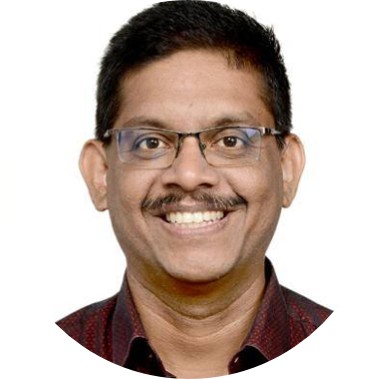 Dr. Sunil V. G. is an Associate Professor in Agricultural Extension at Kerala Agricultural University, bringing over 15 years of dedicated experience in teaching, research, and extension education. Dr. Sunil is a pioneer in digital extension and advisory tools, best known as the developer of the Farm Extension Manager (FEM@Mobile) mobile application—an interactive decision-support platform for farmers and extension specialists. An established author, his prior publications include Multiple Choice Questions in Agricultural Extension and Fundamentals of Agricultural Extension. He can be reached at sunil.vg@kau.in

Add Comment