


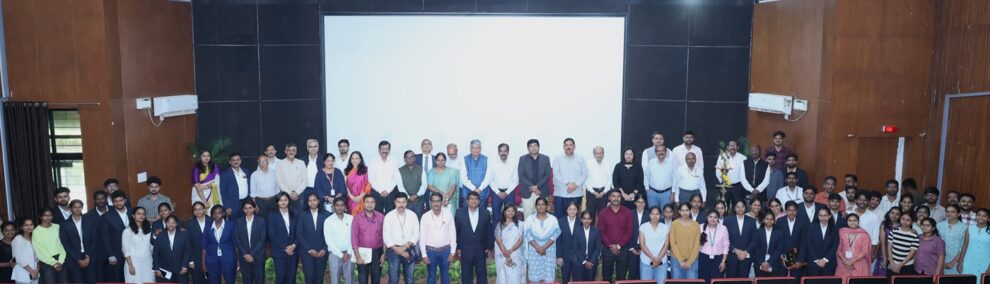
In this meeting note, Sree Lakshmi, Deepak, and Sahla reflect on their participation in the AERA Regional Conference, jointly organised by the University of Agricultural Sciences (UAS), Bengaluru, the Agricultural Economics Research Association (AERA), and the International Food Policy Research Institute (IFPRI), New Delhi.
CONTEXT
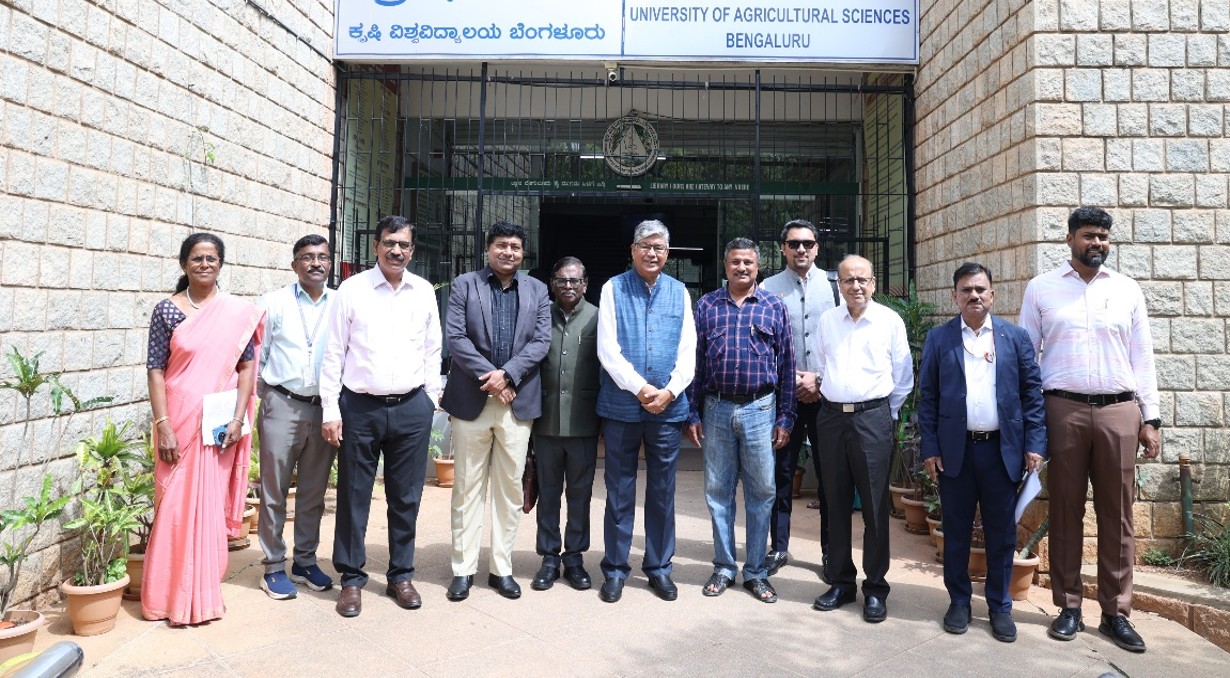
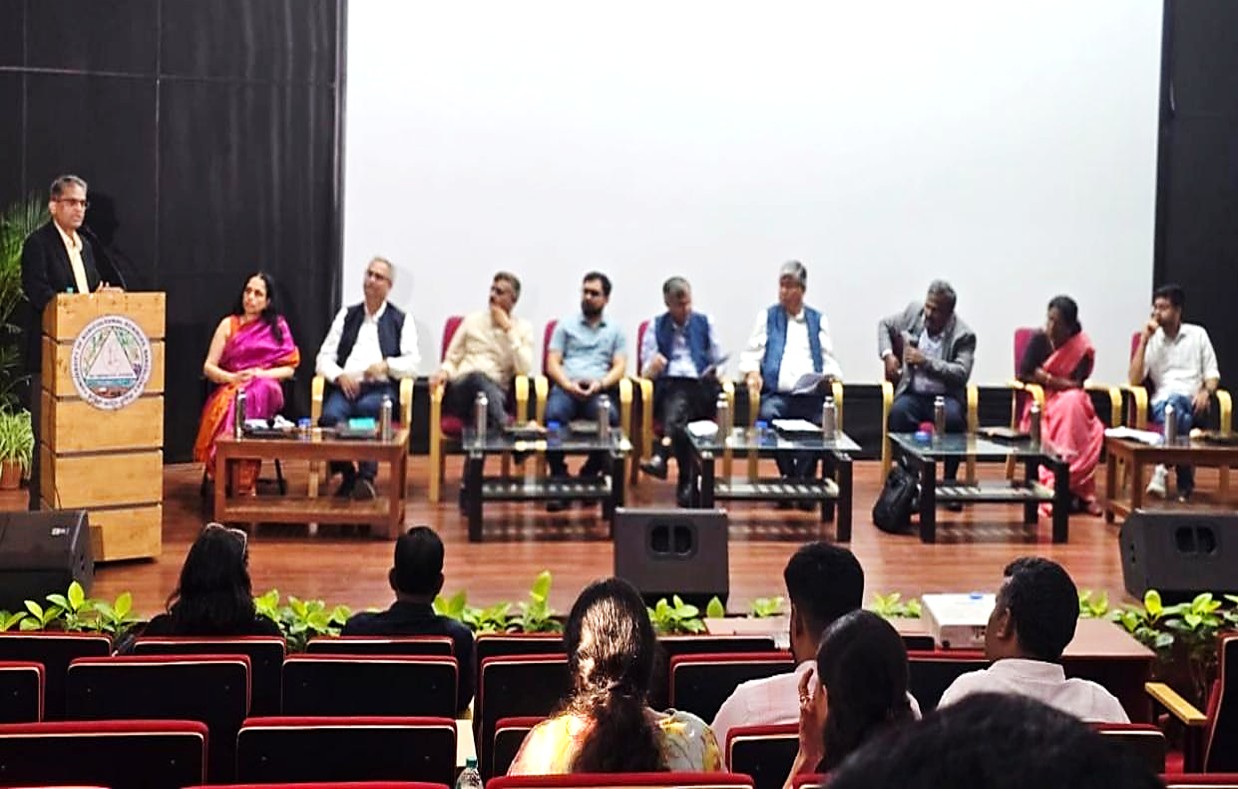
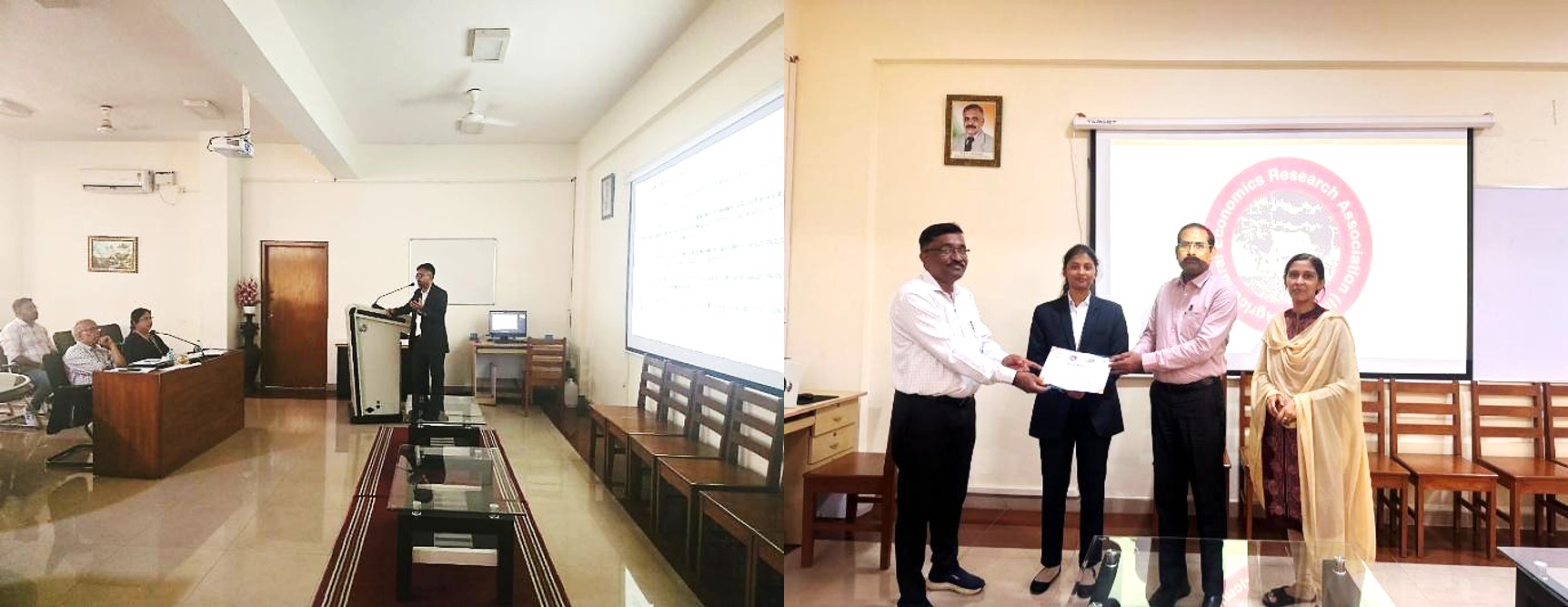
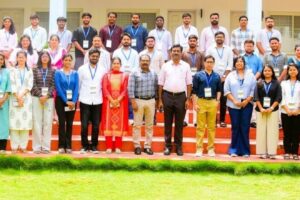
The AERA Regional Conference on “Digital Agriculture for Sustainable and Inclusive Food Systems” provided a platform to reflect on the rapidly evolving digital transformation in agriculture. The conference was jointly organised by the University of Agricultural Sciences (UAS), GKVK, Bengaluru, in collaboration with the Agricultural Economics Research Association (AERA), New Delhi and the International Food Policy Research Institute (IFPRI), from 17–18 June 2026 at the GKVK Campus, Bengaluru. The conference brought together researchers, academicians, policymakers, extension professionals and development practitioners from across India to deliberate on contemporary challenges and opportunities in digital agriculture through keynote addresses, technical sessions, panel discussions and stakeholder interactions.
Although the sessions covered diverse themes ranging from artificial intelligence and geospatial technologies to digital markets and governance, a common thread connected them: the future of digital agriculture depends less on technology itself and more on how effectively it serves people. The conference therefore raised a more fundamental question: How can digital agriculture contribute to sustainable, resilient and inclusive food systems while remaining firmly grounded in farmers’ realities?
The inaugural session with insights from Dr Anjani Kumar and Dr Siddayya set a clear tone: Indian agriculture stands at a structural inflexion point. Technologies such as AI, IoT, GIS, remote sensing, blockchain, and mobile-based advisory platforms are no longer futuristic; they are already reshaping production systems, market structures, and extension delivery. Yet, adoption and effective utilisation of these technologies remain uneven across regions and farming communities.
The sessions reinforced the idea that technology alone cannot transform agriculture unless appropriate institutions, policies, partnerships, and capacity-building efforts support it. Digital literacy gaps, connectivity constraints, affordability barriers and institutional fragmentation continue to exclude large segments of the farming community from the benefits of this transformation. It made us reflect on how technological advancement, despite its promise, can remain distant from farmers unless these underlying barriers are addressed. This tension between technological promise and ground-level realities made the conference a genuinely urgent policy conversation.
DIGITAL AGRICULTURE: BEYOND TECHNOLOGY ADOPTION
One of our major takeaways was that digital agriculture should not be viewed merely as the adoption of technological tools. This challenged our earlier understanding of digital agriculture as primarily a means of improving efficiency and productivity. The discussions helped us recognise that digital technologies are enablers rather than solutions in themselves, with their value ultimately depending on how they improve decision-making, strengthen resilience, reduce risks and generate actionable insights for farmers. As Dr P. K. Joshi observed, “Technology must contribute not only to productivity but also to sustainability, inclusiveness and resilience across food systems.” This perspective broadened our understanding of digital agriculture from a production-oriented approach to one that can contribute to multiple development outcomes simultaneously.
Table 1: Digital Agriculture Initiatives and Platforms Discussed
| Area | Initiatives/platforms/systems discussed |
| Digital Public Infrastructure (DPI) & digital registries |
|
| AI, climate intelligence & pest surveillance |
|
| Digital advisory & information delivery | |
| Digital extension capacity building | |
| Trust-based digital extension |
|
| Digital markets, finance & governance |
|
The initiatives discussed in Table 1 made us rethink Digital Public Infrastructure not simply as a technological backbone, but as an emerging phygital ecosystem that is moving from technology-centred solutions towards farmer-centred, predictive and personalised services. This shifted our perspective on the future role of extension professionals, which will increasingly involve facilitating farmers’ access to and engagement with such interconnected digital ecosystems.
ARTIFICIAL INTELLIGENCE AND THE NEED FOR RESPONSIBLE INNOVATION
Discussions on Artificial Intelligence (AI) and Responsible and Explainable AI (XAI) challenged our conventional understanding of digital advisory systems as “black boxes”, making us realise that AI-generated recommendations should not merely provide answers but also explain the reasoning behind them. This perspective was especially relevant because trust remains central to farmer decision-making. The idea that AI should function as a “co-pilot” rather than a replacement for human expertise reinforced our view that AI-enabled advisory services should complement, rather than substitute, human judgement.
As Dr Ravi Shankar remarked, “The right question is not ‘Can it predict?’ The right question is ‘Can it be challenged?’” This observation prompted us to reconsider how digital advisory systems go beyond predictive accuracy, focusing instead on whether recommendations are transparent, explainable and open to questioning by farmers and advisors. In agricultural contexts, where decisions directly affect livelihoods, transparency and accountability become as important as predictive accuracy. The speaker further noted that “An AI system for agriculture earns trust not when it is accurate, but when it is transparent enough to be questioned.” Equally thought-provoking was Dr Anil Rai’s view that “AI should function as a decision-support system rather than a replacement for human expertise.” These perspectives strengthened our understanding that responsible AI should complement human judgement, drawing on the contextual knowledge and social connections of extension professionals rather than replacing them.
CLIMATE INTELLIGENCE: A NEW FRONTIER FOR EXTENSION
Climate intelligence was one of the themes that made us rethink the future of agricultural extension. Climate variability, resource degradation and increasing production risks require a transition from reactive to proactive agricultural management. Reflecting on this, Dr Ramesh Chand remarked, “There is a need for mitigation rather than adaptation.” This prompted us to consider how timely, data-driven interventions could help anticipate and mitigate climate risks before they occur. Integrating weather, soil, crop, and market data to generate localised, predictive advisories can shift the focus of agricultural extension from information dissemination to prescriptive decision support services that help farmers anticipate risks, identify suitable interventions, and make timely decisions.
The idea of transforming agricultural data into machine-readable formats and utilising long-term datasets for climate risk profiling, forecasting and decision support highlighted the growing convergence of data science and agricultural extension. This convergence will strengthen extension professionals’ ability to translate complex data into timely, context-specific advice and to support farmers in navigating climate uncertainties.
DIGITAL INCLUSION: THE CRITICAL CHALLENGE
While technological innovations received significant attention, the conference also acknowledged the persistent challenges of digital inclusion. Unequal access to digital infrastructure, connectivity constraints, affordability and digital literacy gaps continue to limit the benefits of digital agriculture. This underscored why digital inclusion matters: technological progress can only be meaningful when smallholder farmers can access, understand and benefit from it. Dr Shaik N. Meera pointed out that “Digital agriculture will succeed only when technologies are designed around farmers’ needs and are capable of reaching the last-mile.” Discussions on multilingual platforms, localised content, community-based dissemination mechanisms, and farmer-centric design underscored that meaningful impact depends on accessibility, usability, and inclusiveness rather than on technology alone. We realised that digital divides are not merely technological gaps; they are social, economic and institutional challenges. Addressing them requires sustained efforts in capacity building, digital literacy enhancement, and the strengthening of grassroots organisations.
FARMER PRODUCER ORGANIZATIONS AND COMMUNITY INSTITUTIONS MATTER
An important insight from the panel discussions was the strategic role of FPOs, SHGs and community institutions in scaling digital innovations. Rather than targeting individual farmers alone, Dr Mahin Sharif’s discussion prompted us to recognise the value of leveraging collective institutions as channels for digital service delivery, market intelligence dissemination, and capacity development. This perspective aligns strongly with extension principles that emphasise collective action and social learning. The technical sessions provided practical examples of how digital technologies are being applied to address challenges in production, marketing, resource management, and advisory services. The discussions highlighted that successful digital agriculture initiatives will depend not only on technological sophistication but also on the strength of local institutions capable of facilitating adoption and sustained use.
Taken together, these messages strengthened our understanding that the future of digital agriculture lies not merely in developing smarter technologies, but in building trusted, inclusive and human-centred systems that empower farmers to make better decisions.
KEY TAKEAWAYS
- Technology is an enabler, not an end in itself. Its real value lies in how effectively it contributes to sustainable, inclusive and farmer-centric agricultural systems.
- Digital inclusion is fundamental to equitable transformation. Infrastructure, literacy, affordability and language cannot be treated as secondary concerns if smallholder farmers are to benefit equitably.
- AI-enabled advisory requires trust and accountability. Explainability, transparency and human judgement are essential alongside predictive accuracy.
- The future of extension is increasingly phygital and data-driven. Extension professionals will need to connect farmers with digital ecosystems, interpret complex data, and translate it into locally relevant advice.
- The success of digital agriculture will ultimately depend not on how advanced our technologies become, but on how effectively they improve the lives and livelihoods of farmers.
 Dr Sree Lakshmi Ajayakumar is currently working as a Senior Research Fellow in the Institute of Agribusiness Management at the GKVK Campus, University of Agricultural Sciences, Bangalore. She can be reached at sreelakshmi.abm@gmail.com
 Deepak I. P. is currently pursuing a PhD in Agribusiness Management at the GKVK Campus of the University of Agricultural Sciences, Bangalore. He can be reached at deepakip18598@gmail.com.
 Sahla Salam is currently pursuing a PhD in Agricultural Extension Education at the GKVK Campus, University of Agricultural Sciences, Bangalore. She can be reached at salamsahla422@gmail.com
Add Comment