


In this meeting note, Juno and Aseem share their reflections on participating in the Scientific Writing Workshop Series 2026.
CONTEXT
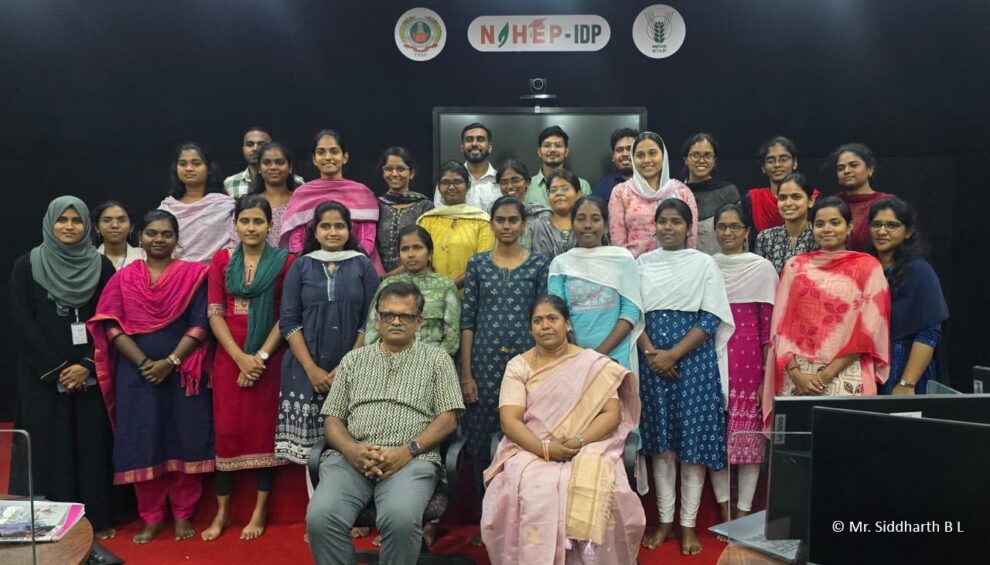
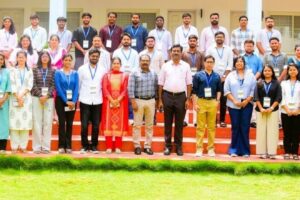
As part of the Scientific Workshop Series 2026 organised by the School of Post Graduate Studies, Tamil Nadu Agricultural University, Coimbatore, a department-level workshop for the Department of Agricultural Extension and Rural Sociology under the Centre for Agricultural and Rural Development Studies was conducted from 20 to 22 July 2026 at the Digital Extension and Innovation Lab for the Post Graduate Scholars of the Department. During the three-day workshop, a renowned speaker was invited each day to deliver sessions on various aspects of scientific writing and scholarly communication. As participants in the workshop, we are delighted to share our reflections and key learnings.
PROGRAMME
Day 1: Impact Evaluation of Agricultural Technologies and Development Interventions: Methods, Application and Emerging Approaches
One of the key learnings from the first day of the Scientific Writing Workshop was that extension professionals should not merely evaluate the impacts created by programmes or schemes but should strive to become impact creators themselves. This perspective was shared during an enriching session led by Dr Sethuraman Sivakumar, Principal Scientist, ICAR-CTCRI, Thiruvananthapuram. Although the concepts, theories, methods, and practical applications of impact evaluation require considerable time to learn and master, the session provided us with a comprehensive overview of these methods, their applications, and emerging approaches.
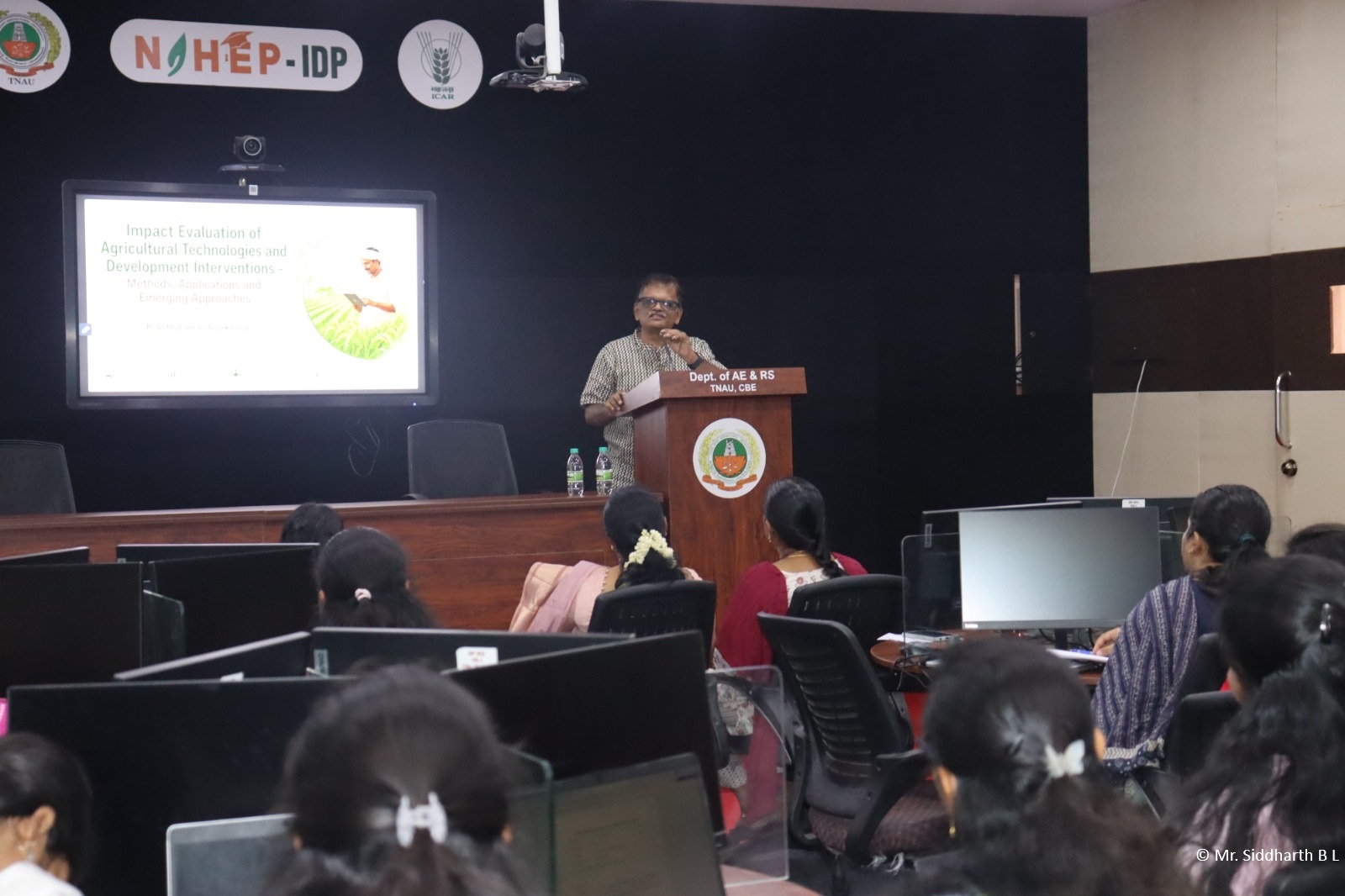
Beginning with the fundamentals of impact evaluation and extending to the current applications of Artificial Intelligence (AI) in impact evaluation, the session comprehensively covered both theoretical and practical aspects. What stood out to us was the realisation that impact evaluation is not simply about measuring a programme’s outcomes after implementation, but also about understanding whether and when an intervention actually requires it. The practical, field-based examples, particularly those drawn from the Rainbow Diet Project, helped us connect the theoretical concepts with real-world impact creation and evaluation. The discussion also changed our understanding of impact evaluation by highlighting that it should be approached in line with the context and purpose of an intervention, rather than treated as a routine exercise for every programme or scheme.
Another valuable insight was the importance of selecting impact evaluation frameworks according to the specific research context, rather than applying them routinely. The discussion on sample selection was particularly useful, especially the importance of estimating sample size based on effect size rather than relying on conventional approaches. The session also reinforced the importance of rigorous scale and index development, as the quality of measurement directly influences the credibility of research findings.
These discussions left us with an important reflection: sound theoretical knowledge combined with rich field experience is essential for becoming field-ready extension scientists. More importantly, the session inspired us to look beyond impact evaluation and to aspire to become impact creators who can contribute meaningfully to agricultural and rural development.
Day 2: Choosing Appropriate Statistical and Analytical Techniques in Social Science and Agricultural Research
The second day of the Scientific Writing Workshop featured an insightful session by Dr J. Paul Mansingh, Professor and Head, VIT School of Agricultural Innovations and Advanced Learning (VAIAL), Vellore Institute of Technology, Vellore, who discussed the importance of selecting appropriate statistical and analytical techniques based on research objectives, study design, and data characteristics. Rather than treating statistical methods as isolated analytical tools, the session emphasised the need to align methodological choices with the underlying research questions to produce scientifically robust and meaningful outcomes.
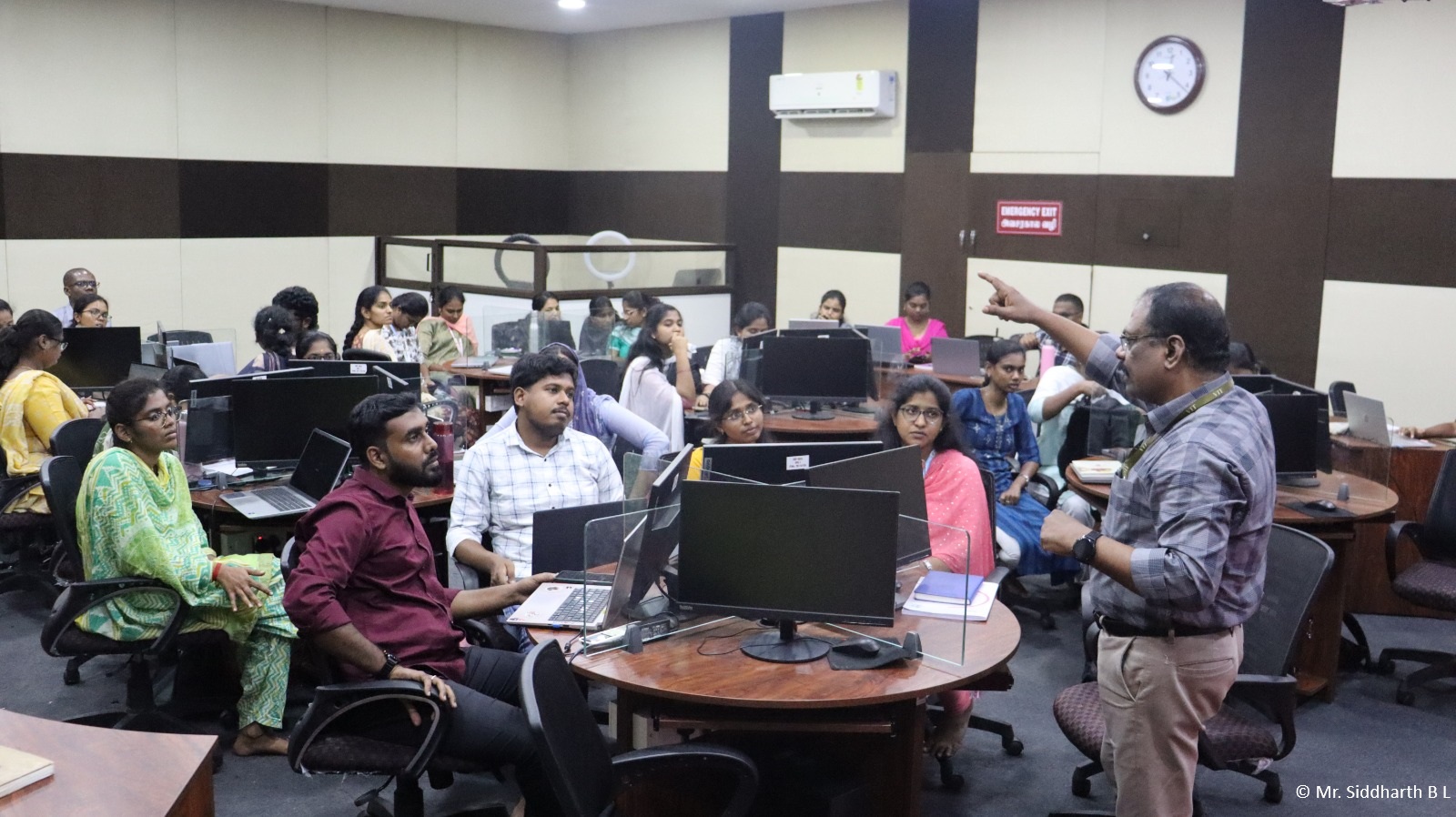
A key highlight was the discussion on improving the quality of systematic reviews through internationally recognised quality assessment frameworks, including the Joanna Briggs Institute (JBI) Critical Appraisal Checklists, Cochrane Risk of Bias (RoB 2), ROBINS-I, and AMSTAR 2. The speaker explained how these frameworks complement reporting guidelines such as PRISMA (Preferred Reporting Items for Systematic Reviews and Meta-Analyses) by systematically evaluating methodological quality and risk of bias, thereby strengthening the credibility of evidence synthesis. The session also introduced alternative review frameworks, including PICO (Population (or Patient), Intervention, Comparison, and Outcome) and SPIDER (Sample, Phenomenon of Interest, Design, Evaluation, and Research Type), illustrating their suitability for different types of research questions and encouraging researchers to move beyond conventional approaches such as TCCM (Theory, Context, Characteristics (or Constructs), and Methodology) when appropriate.
The hands-on exposure changed our understanding of data analysis by showing us that different analytical approaches can serve different purposes within the same research problem. We realised that PLS-SEM can help explain the relationships among constructs and their underlying pathways, while ANN can complement such analysis by focusing on prediction. This helped us understand that choosing an analytical technique should depend on whether the objective is to explain relationships, predict outcomes, or address both.
An interactive discussion further reinforced the idea that analytical techniques should be selected based on the research question, data structure, and underlying assumptions, rather than simply following methodological trends. This helped us recognise that methodological rigour lies not in using increasingly advanced techniques but in choosing an approach that is appropriate, defensible, and relevant to the study’s objectives.
Day 3: From Thesis Chapter to Published Paper: Journal Selection, Reviewer Response, and Publication Strategies
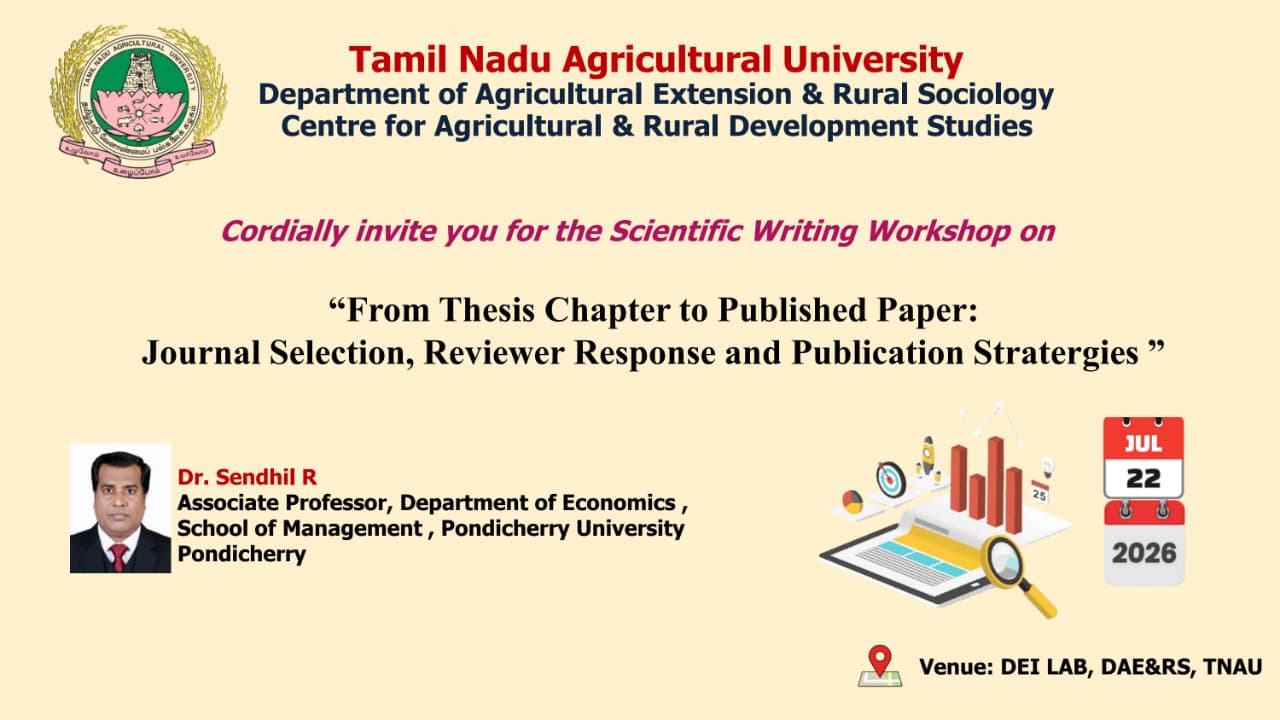
The concluding day of the Scientific Writing Workshop was led by Dr R. Sendhil, Associate Professor, Department of Economics, School of Management, Pondicherry University, who shared practical insights into transforming academic research into publishable journal articles. The session addressed the complete publication process, from manuscript preparation and journal selection to responding to reviewers and achieving successful publication. Throughout the session, the emphasis remained on understanding editorial expectations and presenting research as a coherent, stand-alone scientific contribution.
One of the major discussions centred on selecting appropriate journals and preparing manuscripts that meet editorial standards. The speaker introduced the ROSES framework for reporting systematic reviews and evidence synthesis studies, while highlighting several practical aspects that often influence editorial decisions, including manuscript organisation, clarity of writing, appropriate keyword selection, consistency in formatting, and effective presentation of tables and figures. Valuable suggestions were also provided on using equation editors for mathematical expressions and preparing manuscripts that require minimal editorial corrections.
The session also introduced participants to various journal-finder tools offered by major publishers, including Elsevier Journal Finder, Springer Nature Journal Suggester, Wiley Journal Finder, and Taylor & Francis Journal Suggester. It highlighted their usefulness for identifying suitable target journals based on manuscript scope and content. In addition, the speaker discussed funding opportunities that support research dissemination, including grants offered by universities, research councils, and national and international funding agencies to cover publication charges, particularly for open-access journals. These discussions provided valuable guidance on strategically planning manuscript submission while enhancing the visibility and accessibility of scientific research.
The session also explored emerging practices for increasing the visibility and impact of research. The advantages and limitations of preprint publications and platforms such as SSRN and Research Square were discussed, along with innovative dissemination strategies, including the incorporation of QR codes linking to preprints on conference posters. The importance of maintaining an active presence on academic networking platforms was emphasised as a means of enhancing research visibility, collaboration, and citation potential. The speaker also demonstrated the responsible use of Google’s large language models (LLMs) to support literature exploration and scientific writing, while underscoring the need for critical evaluation and ethical use of AI-assisted tools.
The workshop concluded with hands-on exposure to bibliometric analysis, where participants were introduced to software such as VOSviewer and Biblioshiny for mapping research trends, collaboration networks, and thematic developments. This helped us understand how bibliometric analysis can provide a broader view of a research field by identifying emerging themes, patterns of collaboration, and areas that may require further investigation. The speaker also provided in-depth insights into meta-analysis, demonstrating its concepts and procedures using Jamovi. The session explained the process of selecting studies for meta-analysis based on effect sizes and relevant coefficients. It introduced the concepts of group and subgroup analyses to interpret variation across studies. This practical demonstration offered a clear understanding of how quantitative evidence from multiple studies can be synthesised to generate robust scientific conclusions.
Overall, the session offered practical guidance on navigating the publication process and highlighted that successful scientific publishing depends not only on strong research but also on effective communication, strategic dissemination, and adherence to international publishing standards.
CONCLUSION
For us, as agricultural extension professionals, the workshop reinforced the importance of understanding scientific publishing, which has increasingly become a highly competitive and commercially driven ecosystem. It made us reflect on our own approach to research and publication. It encouraged us to be more thoughtful in selecting methods, communicating our findings and navigating the evolving publishing landscape.
Acknowledgement
The authors sincerely thank the School of Postgraduate Studies, Tamil Nadu Agricultural University (TNAU), Coimbatore, and the Department of Agricultural Extension & Rural Sociology (DAE & RS), Centre for Agricultural & Rural Development Studies (CARDS), TNAU, for thoughtfully curating and coordinating the workshop. We are grateful to all the resource persons for sharing their valuable expertise and experiences. We also thank Dr C. Karthikeyan, Professor & Head, DAE & RS, TNAU, and Dr Premavathi R., Professor and PG Coordinator, DAE & RS, TNAU, for their support in facilitating the smooth conduct of the workshop.
 Juno A M is currently pursuing M.Sc. in Agricultural Extension Education at Tamil Nadu Agricultural University, Coimbatore and is an AESA Volunteer. She can be reached at amjuno2001@gmail.com.
 Mohamed Aseemudheen M is currently pursuing a PhD in Agricultural Extension Education at Tamil Nadu Agricultural University, Coimbatore, and is an AESA Volunteer. He can be reached at aseem1264@gmail.com.
Add Comment