
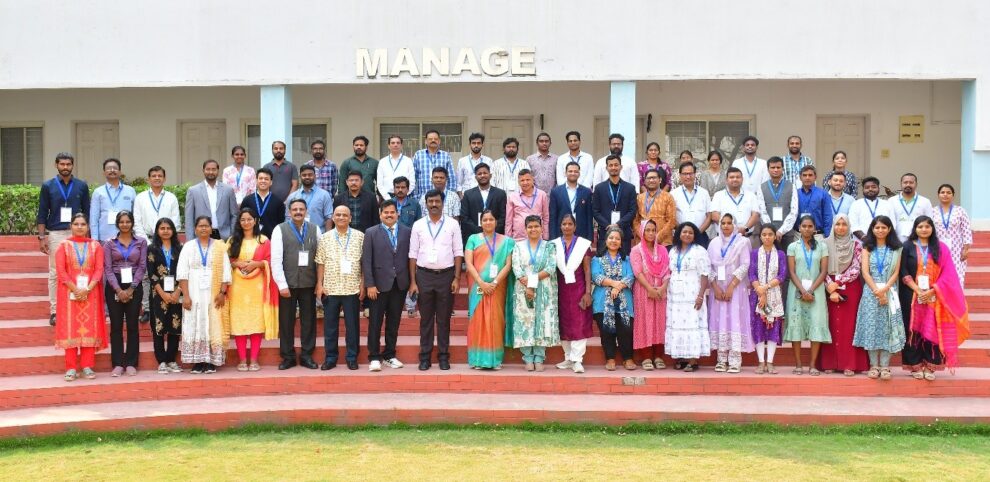
In this meeting note, Archana reflects on her participation and co-organisation of the Fisheries stakeholders’ meeting and the national policy workshop at MANAGE-FISHub.
CONTEXT
MANAGE-FISHub, hosted at MANAGE in Hyderabad, is a national-level incubation and innovation hub at the National Institute of Agricultural Extension Management (MANAGE). It was established at MANAGE in 2025 with the support of the Department of Fisheries (DoF), Ministry of Fisheries, Animal Husbandry and Dairying (MoFAHD), Government of India. The Fisheries Startup and Aquapreneurship Stakeholders Meet and National Policy Workshop on Startups and Entrepreneurship in Fisheries was organised by MANAGE-Fisheries Innovation and Startup Hub (MANAGE-FISHub) at the National Institute of Agricultural Extension Management (MANAGE), Hyderabad, on March 16–17, 2026.
The workshop brought together 66 participants representing diverse stakeholder groups across the fisheries sector, including startup founders, aquapreneurs, government institutions, extension organisations, NGOs, incubation centres, and young professionals, creating a platform for sharing diverse perspectives and experiences. The two-day dialogue connected ground realities, aquapreneurship, and policy discussions, bringing field experiences into conversation with the policy perspectives.
SEVEN INSIGHTS THAT STAYED WITH ME
1. Fisheries Development Must Be Inclusive, Not Just Productive
“Inclusivity must be built into the system, not added later. Fishers should be at the centre of fisheries development.”
-Mr Tanmay Wagh, Senior Programme Officer, Dakshin Foundation
“Capacity building must go beyond training. It should create a dynamic ecosystem where stakeholders come together, share ground realities, and co-develop actionable pathways for enhancing nutritional security, livelihoods and fisheries entrepreneurship through collaboration and partnerships.”
–Dr Saravanan Raj, Director (Agricultural Extension) and CEO, MANAGE-FISHub
2. Women Are Central to Fisheries, Yet Often Invisible in Infrastructure Design
A discussion on women’s role in post-harvest fisheries highlighted that, despite their significant contributions to processing, value addition, and marketing, existing infrastructure often overlooks their needs for safe, hygienic, accessible, and gender-responsive workspaces. It reinforced that true inclusion requires systems and facilities designed around the needs of those who use them.
“One-time training creates awareness; continuous handholding creates change. Tools like the Fisher Friendly mobile app can help ensure that women and small-scale fishers are active partners in innovation.”
– Dr Velvizhi S., Marine Scientist, MSSRF
3. The Real Challenge Is Not Developing Technology, But Making It Work
Across discussions on seaweed, aquaculture, and digital innovations, a recurring message emerged: technology succeeds only when it aligns with local needs, environmental conditions, affordability, and market realities. I realised that innovation creates impact not because it is new, but because it effectively addresses local challenges.
“The most successful enterprises are not always the most innovative; they are the ones that consistently deliver value.”
– Dr Mahidhar Bolem, Founder & Director, Marsco Nutraceuticals Pvt. Ltd.
4. Entrepreneurship Requires Systems, Not Just Ideas
The startup journeys challenged the notion that entrepreneurial success begins with a breakthrough idea. Instead, founders emphasised that sustainable growth depends on strong systems, disciplined execution, sound business planning, SOPs, market intelligence, pricing strategies, operational efficiency, and phased scaling.
“Sustainability and scaling do not happen by chance. They are built through strong systems, SOPs, and continuous refinement.”
– Mr Aditya Rithvik Narra, CEO, SmartGreen Aquaculture Pvt. Ltd.
“Scaling Recirculating Aquaculture System (RAS) requires not just advanced technology, but also precision in operations, cost efficiency, and strong market alignment.”
–Mr Vatsal Agarwal, Co-founder, Blue Wave Aquaculture
5. Access to Finance Remains a Critical Bottleneck
Limited understanding of fisheries and aquaculture among banks and financial institutions continues to constrain entrepreneurs’ access to finance. Discussions also emphasised that successful aquapreneurship requires balancing environmental, biological, and business considerations with a long-term perspective.
6. Seeing Fisheries through a Wider Lens: From Production-Centric to Value-Centric Thinking
The discussions broadened my perspective by revealing both the challenges of market access, cold-chain infrastructure, and price realisation, and the opportunities in value addition, processing, branding, packaging, and entrepreneurship, highlighting the interconnected nature of the fisheries sector.
“In ornamental fisheries, the real value often lies beyond fish production. More than 60% of the sector’s value comes from aquarium accessories.”
– Dr Atul Kumar Jain, Director, Ornamental Fisheries Training and Research Institute
7. A Deeper Look at Seaweed Entrepreneurship: Balancing Conservation and Commercialisation
Discussions highlighted the sector’s dependence on Kappaphycus (Kappaphycus alvarezii is an introduced red seaweed cultivated in India mainly for carrageenan extraction and liquid bio-stimulants) due to its high market value and short cultivation cycle, despite concerns over its invasive nature. Key challenges included the availability of quality seed, heavy-metal and food-safety concerns, and limited processing and value-addition infrastructure. Participants emphasised the need to strengthen the entire seaweed ecosystem through species diversification, local seed systems, processing technologies, and market development.
“A balanced approach integrating local seed production, species diversification, and strong community-based systems is essential for scaling sustainable seaweed enterprises.”
– Mr Akshay Jadhav, Founder & CEO, Raftech Solutions Pvt. Ltd.
LOOKING AHEAD: WHAT THE SECTOR NEEDS NEXT
Despite the diversity of voices in the room, many conversations ultimately pointed towards a similar set of priorities for the future of aquapreneurship. These include:
- Bridge the lab-to-market gap: Field-test and commercialise research outputs through stronger academia–industry linkages.
- Strengthen decentralised support: Expand coastal incubation centres, pond clinics, and extension services.
- Improve access to finance: Increase awareness among banks and financial institutions on fisheries business models.
- Invest in infrastructure: Strengthen cold chain, processing, and value addition facilities.
- Promote inclusive entrepreneurship: Develop women-friendly technologies, infrastructure, and enterprise support.
- Enhance collaboration: Foster partnerships among ICAR institutes (Central Institute of Fisheries Education, Central Marine Fisheries Research Institute, Central Institute of Brackish Water Aquaculture, Central Inland Fisheries Research Institute, National Fisheries Development Board, Marine Products Export Development Authority, state fisheries departments, incubators, startups, and community organisations).
- Strengthen the seaweed sector: Promote indigenous species, quality seed systems, R&D, market development, and commercialisation through agencies such as Indian Council of Agricultural Research – Central Marine Fisheries Research Institute, Central Salt & Marine Chemicals Research Institute, National Fisheries Development Board, and Marine Products Export Development Authority.
DISTINCTIVE FEATURES OF THE WORKSHOP
Less time on formalities, more time for interaction:
The workshop minimised formalities and focused on stakeholder discussions, knowledge sharing, and the exchange of experience, creating greater opportunities for meaningful dialogue and active participation throughout the two-day programme.
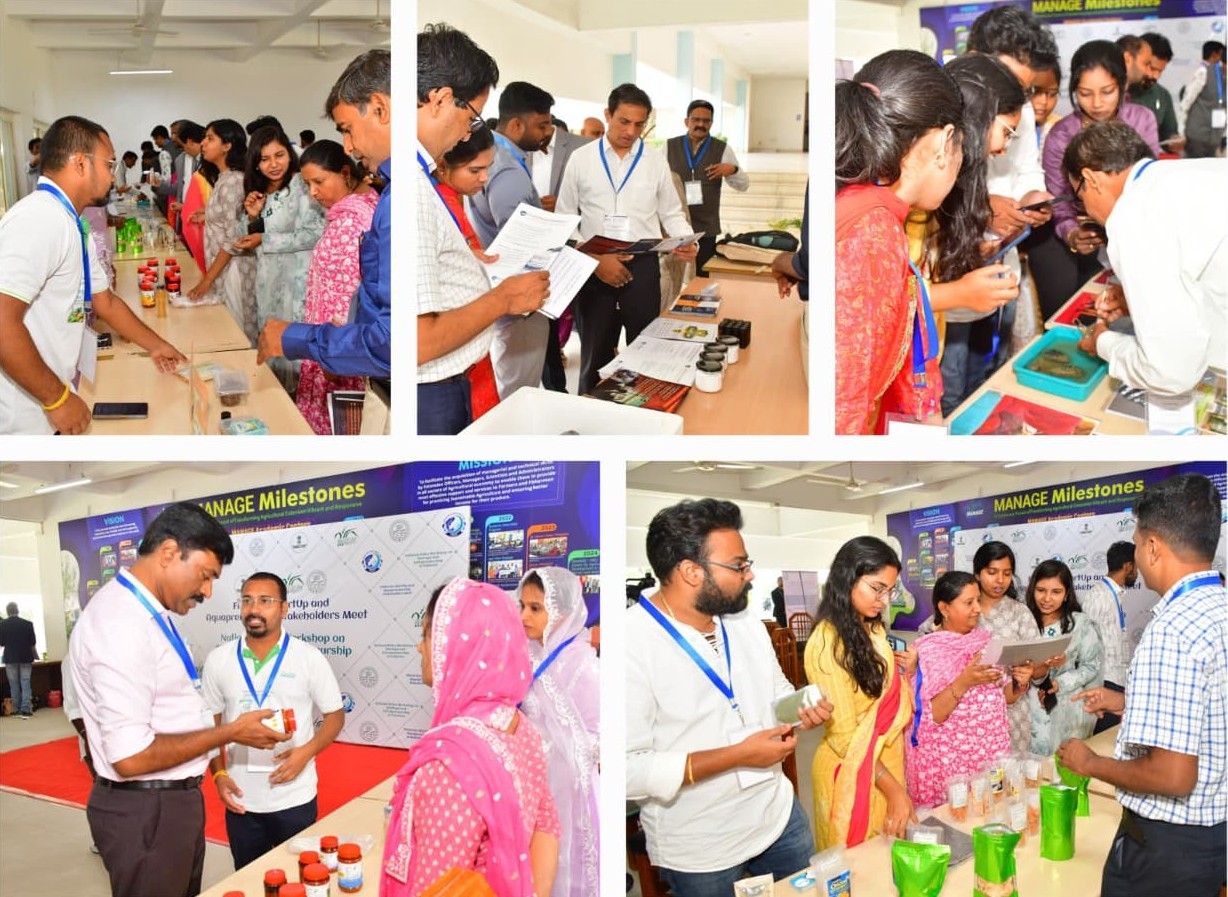
Networking was extended beyond the sessions:
The exhibition showcased diverse fisheries and aquaculture innovations, including seaweed-based products, value-added fish products, pearl farming, crab culture, aqua feed innovations, and Lakshadweep tuna pickles. Beyond displaying innovations, it fostered meaningful interactions, encouraging participants to exchange ideas, experiences, and perspectives.
Learning While Organising:
My involvement began well before the workshop, contributing to programme coordination, communication materials, logistics, participant engagement, and event execution. I also designed promotional materials and social media posts for panellists. The experience strengthened my skills in programme management, teamwork, and coordination while providing valuable exposure to organising a large-scale workshop.
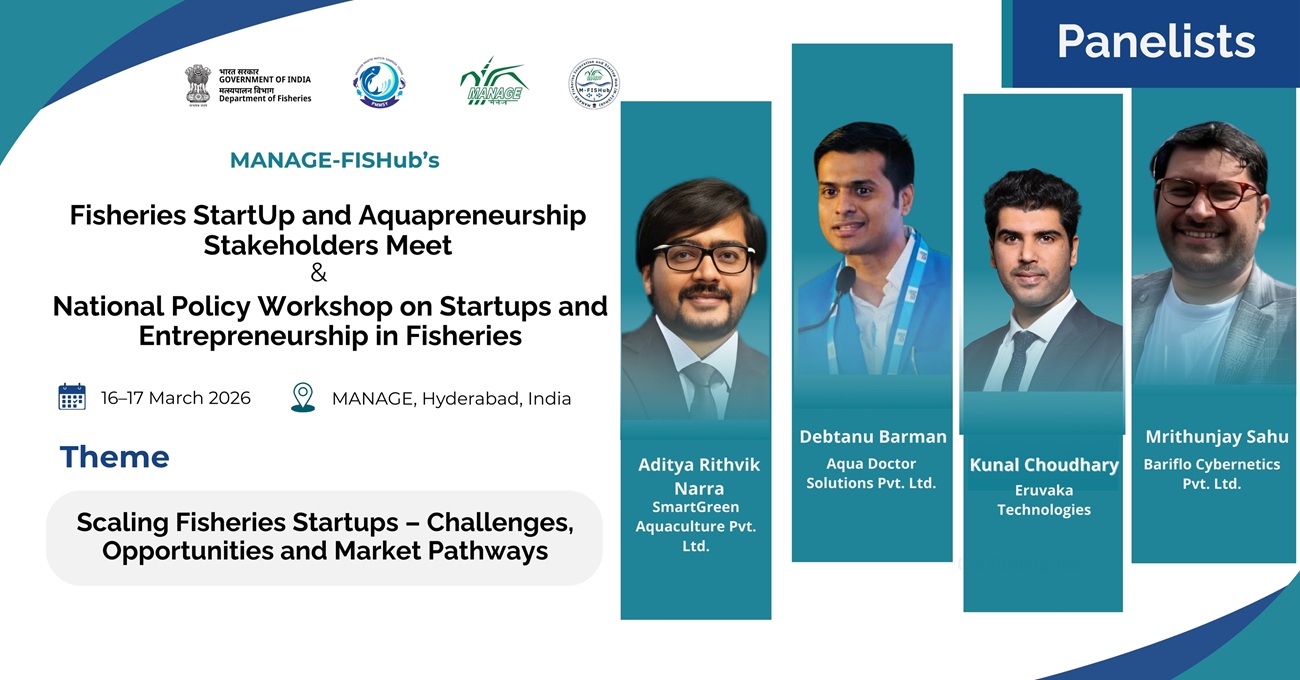
Time Management and Participant Support:
As the organising team, we ensured sessions ran on schedule and remained available to support participants throughout the workshop. Despite the LPG shortage in Hyderabad, which affected catering arrangements, we adapted quickly and ensured the programme was conducted smoothly. Looking back, it serves as a reminder that successful events often hinge on how teams adapt to unexpected situations.
 Post-workshop involvement:
As organisers, we shared the proceedings, resource materials, photographs, and participant contacts among all participants and experts. Key insights were also disseminated through the Voices Shaping Fisheries Entrepreneurship social media series, helping sustain engagement and learning beyond the two-day programme
END NOTE
The workshop provided me with a broader understanding of the fisheries sector. As a fisheries extension student, I often approach issues from the perspective of communities and livelihoods. Over the course of the two days, however, I realised that the fisheries ecosystem is far more complex, with each stakeholder bringing different priorities, expectations, and realities. I am also wondering how we can build a fisheries startup ecosystem that is innovative, inclusive, and accessible to those who need it most.
Following this workshop, I am eager to participate in the MANAGE- International Summit on Agri and Fisheries Startups: Technology, Innovations and Services for Sustainable Agriculture and Fisheries Development scheduled for 10–12 February 2027.
I sincerely thank MANAGE-FISHub for the opportunity to be part of this programme as both an organiser and a learner. I am especially grateful to Dr Saravanan Raj, Director (Agricultural Extension), MANAGE and CEO, MANAGE-FISHub, for his vision in creating platforms that encourage dialogue, innovation, and collaboration within the fisheries sector.
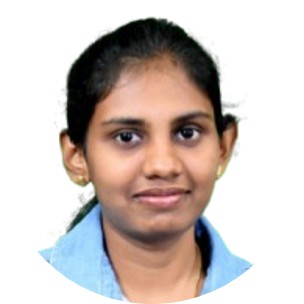 Archana R. previously completed her internship at MANAGE-FISHub, Hyderabad and is currently working as Research Associate at the Administrative Staff College of India (ASCI) at Hyderabad. She completed her Master of Fisheries Science (M.F.Sc.) in Fisheries Extension from the Kerala University of Fisheries and Ocean Studies (KUFOS). Her areas of interest include migratory fisheries, fisheries law, and the fisheries startup ecosystem. She can be reached at archanaramalingam18@gmail.com.
Add Comment