

Platform: National Institute of Agricultural Extension Management (MANAGE), Hyderabad
Duration: One year (Two Semesters)
Certification: Yes (Paid)
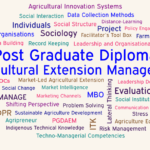
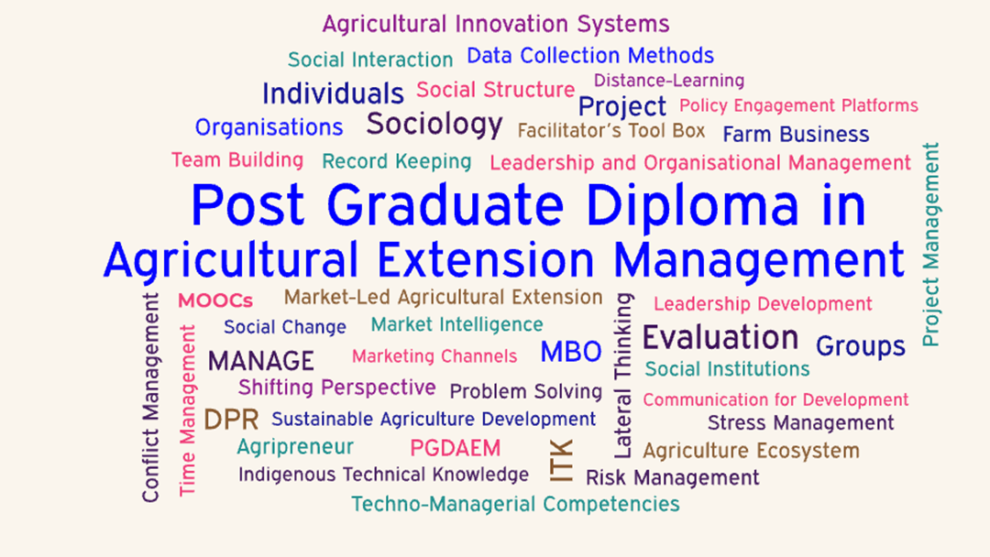
The National Institute of Agricultural Extension Management (MANAGE) introduced the Post Graduate Diploma in Agricultural Extension Management (PGDAEM) in 2007 as a distance-learning programme and later launched PGDAEM-MOOCs in 2017 to expand its reach through an online learning platform. It aims to strengthen extension professionals’ techno-managerial competencies by integrating extension management with communication, facilitation, planning, leadership, agribusiness, agricultural innovation systems, and sustainable agricultural development. The diploma is a one-year, 30-credit programme offered across two semesters, comprising nine courses, nine mandatory assignments, and a project. Comprehensive information can be found in the official course prospectus.
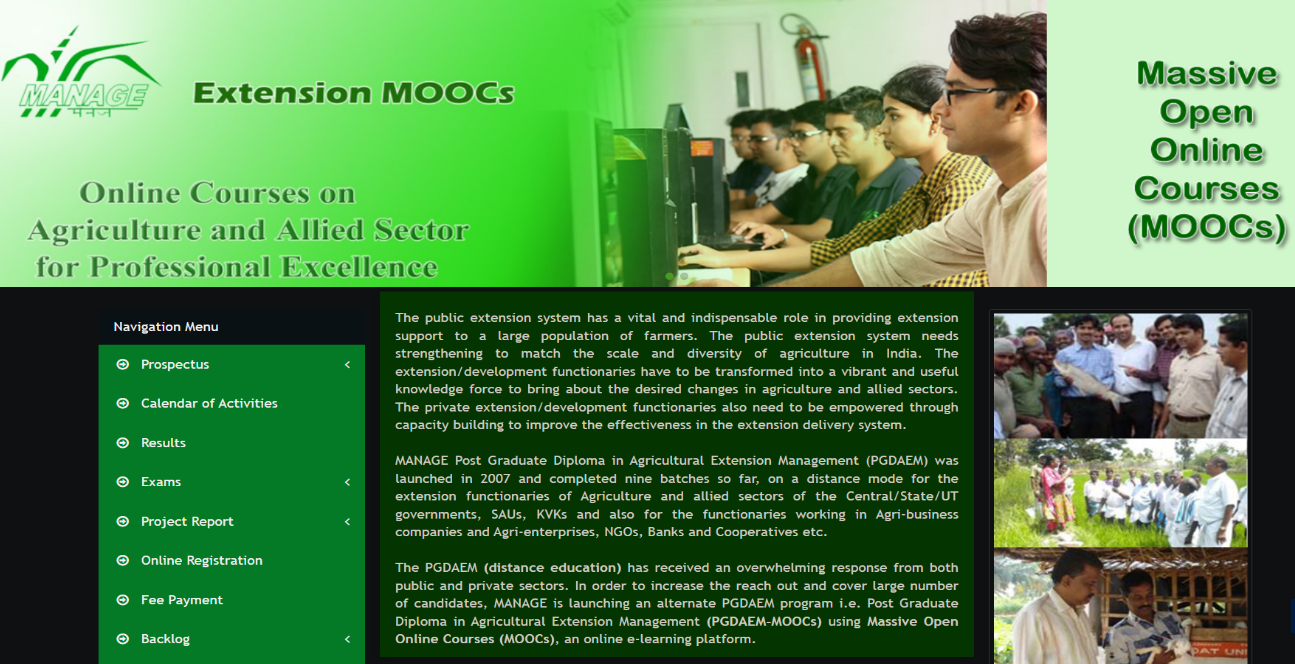
Our motivation for enrolling in PGDAEM-MOOCs was primarily academic and professional development. As PhD scholars in Extension Education, we wanted to complement our research-oriented training with a stronger understanding of extension management and its practical dimensions. The programme required self-discipline because of its largely independent format, but its flexibility allowed us to pursue the course alongside doctoral research. We particularly enjoyed exploring extension beyond technology dissemination and understanding its link to communication, facilitation, leadership, planning, and management.
We enrolled in the May and November 2024 batches while pursuing our PhD in Extension Education/Agricultural Extension Education, respectively. We were strongly interested in management, and PGDAEM-MOOCs offered an ideal opportunity to pursue a structured, management-oriented programme alongside our doctoral research. The programme covers both foundational and applied dimensions of extension, including agricultural extension, rural sociology, communication, facilitation, leadership and management, gender mainstreaming, farm business management, extension planning and sustainable agricultural development. It also introduces us to contemporary areas such as ICT-enabled extension, entrepreneurship, and farmer-oriented advisory approaches.
It follows an asynchronous online learning model supported by live facilitation and revision sessions conducted by subject experts. We received recorded lectures, study materials, PowerPoint presentations, and access to discussion forums for self-paced learning. Requiring about five to six hours of study per week, the programme was well structured and manageable alongside our academic commitments. In our experience, for someone already pursuing advanced research in Extension Education, some foundational content may feel familiar, while the applied components provide greater opportunities for learning and reflection.
To obtain the certification, learners must complete the prescribed courses, quizzes, assignments, examinations, and project work. The programme guidelines indicate that assignments are compulsory, with each assignment carrying 30 marks and 15 marks required for qualification. The project carries 100 marks, with 50 marks required for qualification, while semester-end examinations are objective-type examinations carrying 70 marks, with 35 marks required for qualification. Designated subject matter experts evaluate assignments, while the system generates examination scores electronically using the prescribed answer key.
The programme also provides a clear grading structure, including distinction, first class, and pass categories. The assessment system encourages continuous learning through compulsory assignments for each course, semester-end online objective examinations, and a mandatory project evaluated by subject experts. The examinations are conducted online within a 24-hour window, allowing learners to appear from a location of their convenience. The programme calendar provides all the essential information in a clear and detailed manner.
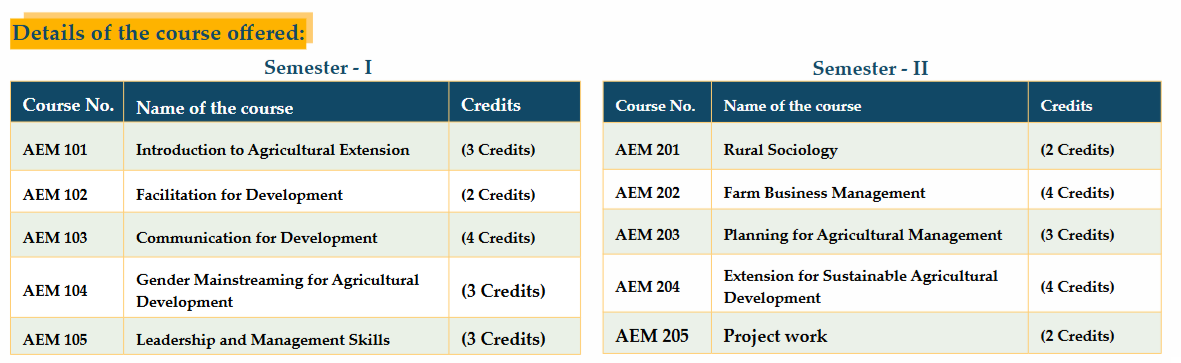 Course structure and programme details adapted from the official PGDAEM-MOOCs prospectus, MANAGE
Among the nine courses, AEM 102: Facilitation for Development and AEM 203: Planning for Agricultural Management were the most engaging because of their practical orientation. The concise study materials, practical examples, and management perspectives made these courses particularly relevant to extension professionals. One of the most rewarding components was the mandatory project under the theme Extension Approaches and Methods, titled “Diffusion and Adoption of Farm Innovation.” The project examined major theories of innovation diffusion and technology adoption, including the Diffusion of Innovations Theory, Theory of Planned Behaviour, Technology Acceptance Model, determinants of adoption, information networks, and technology adoption constraints, using Zero Budget Natural Farming as a case illustration. More importantly, I applied this knowledge in my PhD seminar, where I developed and presented the concept of an “Adoption Spectrum” to explain agricultural technology adoption. This demonstrated the programme’s practical relevance beyond the diploma itself. – Basu Anand
The learning resources were generally excellent. Video lectures, PowerPoint presentations, facilitation sessions, and study materials collectively provided a comprehensive learning experience, while the consultant-led revision sessions before examinations greatly helped consolidate concepts. The assignments encouraged conceptual understanding and practical application rather than simply reproducing theoretical content. The course has also benefited foreign candidates; you can read the testimonial here.
Nevertheless, there is scope for improvement. While the online platform was generally user-friendly, occasional technical glitches occurred during assignment submission and examinations, though the system usually resumed where it left off. Some study materials could also benefit from better formatting and more tables and comparative illustrations. For example, the AEM 102 notes were exceptionally well structured and learner-friendly, whereas the AEM 103: Communication for Development PDF would benefit from better formatting and improved figure captions.
Similarly, certain sections of AEM 101, such as Agricultural Development Programmes and Extension Programmes in Other Countries, could be presented in tabular or comparative formats to improve readability and revision. AEM 204: Extension for Sustainable Agricultural Development introduced fascinating concepts but contained extensive reading material that could be condensed without compromising content quality. Allowing learners continued access to study materials throughout the semester, while restricting access to assignment submissions, would further support self-directed learning.
Student engagement can also be strengthened. Although the WhatsApp groups remained active and the consultant’s continuous guidance was highly appreciated, the official discussion forums witnessed limited participation. Faculty-moderated discussions and structured peer-learning activities could encourage richer academic interaction. Similarly, assigning project mentors or allowing faculty from learners’ parent institutions to supervise, along with issuing authenticated project completion reports, would increase the academic value of the project component and facilitate its use in publications, research portfolios, and professional interviews. Given its practical orientation, agricultural universities may also consider integrating PGDAEM-MOOCs into postgraduate curricula under the Academic Bank of Credits (ABC) framework, enabling students to earn both academic credits and a nationally recognised professional qualification.
Overall, PGDAEM-MOOCs effectively bridge the gap between theoretical agricultural extension education and practical extension management. The programme broadened our understanding of agricultural systems, participatory approaches, planning, facilitation, leadership, and technology adoption while complementing our doctoral research and professional development. Although there is scope to further strengthen learner engagement, project mentoring, and resource presentation, the programme provides a valuable learning experience for those seeking practical competencies in contemporary agricultural extension and management.
 Dr. Basu Anand is an Assistant Professor (Contractual) in the subject of Agriculture Extension Education at Government Agriculture College, Hardoi, Uttar Pradesh. He is an AESA Volunteer who actively engages in research and technical writing. His interests include agricultural extension management, rural development, disaster management, journalism and mass communication, and agro-warehouse management. He can be reached at basuanand.edu@gmail.com.
 Mr. Umashankar Rawat is a PhD Scholar in Extension Education at ICAR-Indian Veterinary Research Institute (IVRI), Izatnagar, India. His research interests include livestock and poultry extension, farmers’ information needs, digital extension, ICT-enabled advisory services, and farmer-centred extension systems. He can be reached at shankarrawat0107@gmail.com
Add Comment