
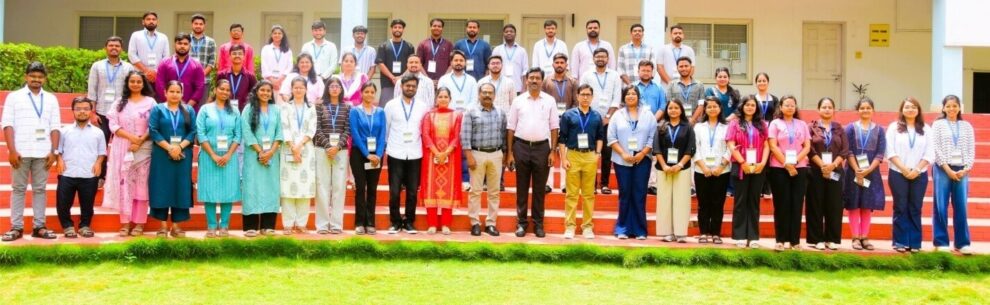
In this meeting note, Parjanya, Sreelekha and Yogesh share their experiences, insights and key takeaways from the NYPDP P.L.U.S. programme on Research Methodology in Agricultural Extension, organised by MANAGE, Hyderabad.
CONTEXT
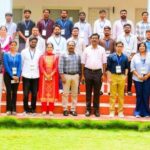
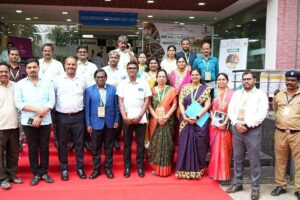
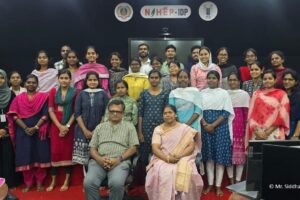
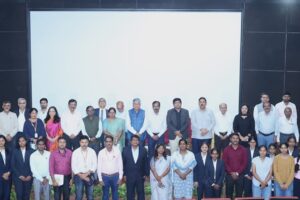
The National Young Professionals Development Programme (NYPDP) Professional Learning to Unlock the Specialisation in Agricultural Extension (P.L.U.S.) on Research Methodology in Agricultural Extension was held at the National Institute of Agricultural Extension Management (MANAGE), Hyderabad, from 7 to 11 September 2026. The programme united young professionals and researchers eager to deepen their knowledge of research methodologies in agricultural extension.
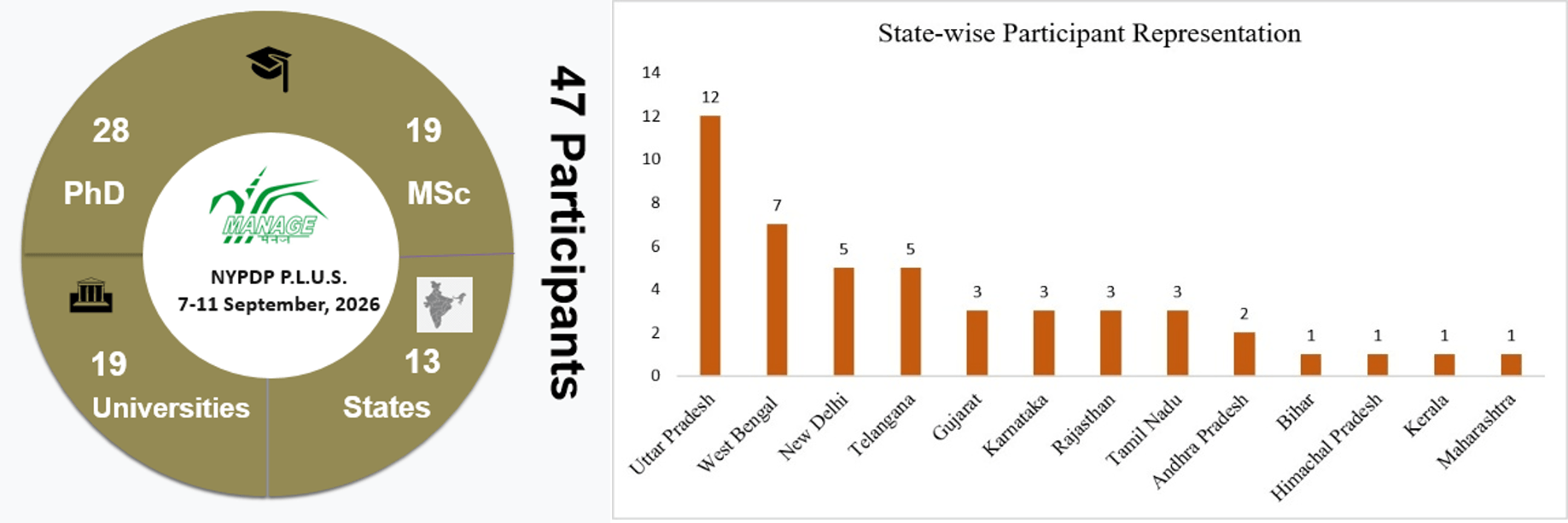
It drew 47 participants from 19 universities and institutions with a reasonably balanced gender distribution: 26 males (55.3%) and 21 females (44.7%). Academically, most participants held degrees, with 28 (59.58%) pursuing PhDs and 19 (40.42%) holding master’s degrees.
For us, NYPDP P.L.U.S. was more than just a training programme; it was an opportunity to strengthen our research perspective, explore new possibilities, look beyond the horizon and broaden our understanding of how we could shape our academic journey ahead.
THE PROGRAMME
Rethinking Research Methodology in Agricultural Extension
Before this programme, we had a rather narrow exposure to research methodology in Agricultural Extension. We often felt that its scope was restricted, that developing valid and reliable methodologies was difficult and that clear methodologies were not always available for different research objectives.
As the programme progressed, this understanding began to change. We realised how much we still had to learn and how many interesting, simple and practical methodologies could be explored and applied in Extension research.
What stayed with us: Research methodology in Extension is much broader and more interesting than we had imagined, and we now feel excited to explore it further.
Beyond Familiar Methods: Becoming Research-Ready
One thing we carried with us from the programme was the need to question what we already thought we knew. As the sessions progressed, we began to see that the assumptions with which we entered the programme could sometimes become boundaries if we never stopped to reconsider them.
The programme gave us a different way of looking at research. We learnt that a good researcher is not someone who simply knows many methods, but someone who is curious enough to ask better questions and flexible enough to explore different ways of finding answers.
What stayed with us: Becoming a researcher is not about knowing everything; it is about remaining curious enough to keep learning.
A Researcher’s Toolkit: Discovering Methods- We Never Knew
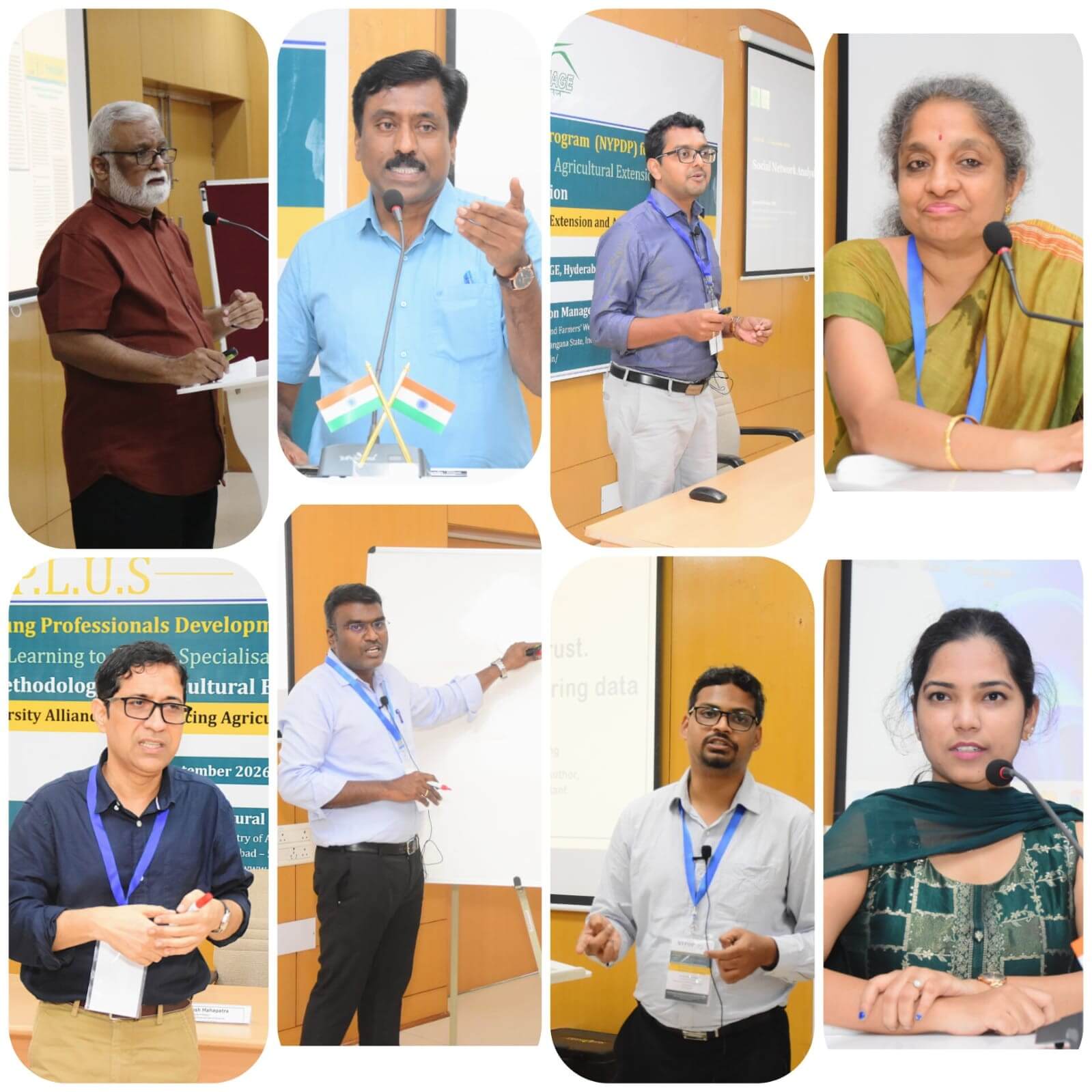
We explored different ways to approach a research questions, including qualitative research, comparative and historical approaches, interviews, oral and life histories, case studies, textual analysis, ethnography, Systematic Literature Review (SLR), Social Network Analysis, Textometry, Structural Equation Modelling (SEM), scale development and validation, and research data visualisation by eminent experts.
We were particularly fascinated by how these methods can answer very different kinds of questions. From understanding experiences through qualitative research and case studies to examining relationships through SNA and SEM and from identifying research gaps through SLR to making sense of large volumes of text through textometry, the possibilities felt much wider than what could be imagined. We also explored tools such as Gephi, Orange, JASP and Google Colab, which showed us how digital tools can make research more practical and systematic.
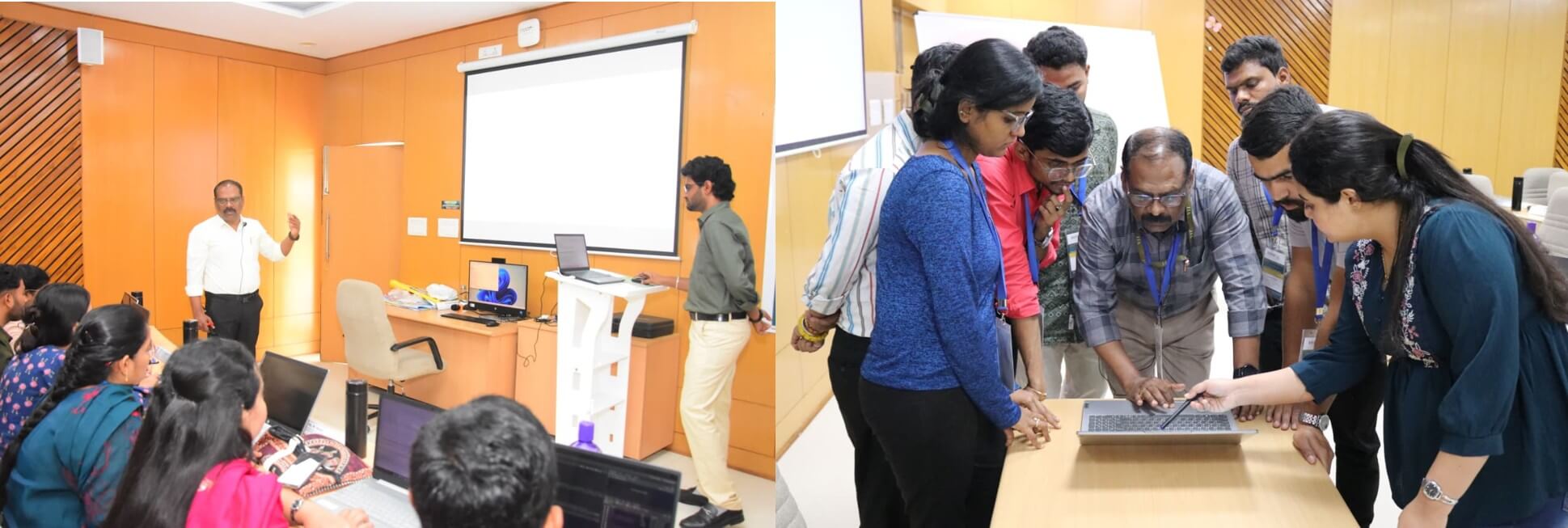
Dr J Paul Mansingh introducing participants to predictive modelling approaches and their applications and guiding participants through the systematic literature review process, from framing research questions to synthesizing evidence
What stayed with us: We entered the programme thinking research had a few familiar routes; we left knowing there is an entire toolkit waiting to be explored.
Learning to Think Before We Write
As we started thinking seriously about writing research papers and review papers, we realised that good research writing begins much before the actual writing. We learnt that finding a research gap is not simply about finding a topic that has been studied less, but about critically understanding existing literature, connecting ideas and identifying what genuinely needs to be explored.
Our understanding of scientific writing also changed. We began to see a research paper as a connected story, where the problem, literature, gap, methodology, findings and discussion should logically lead into one another.
What stayed with us: Before learning how to write a good paper, we need to learn how to think like a researcher.
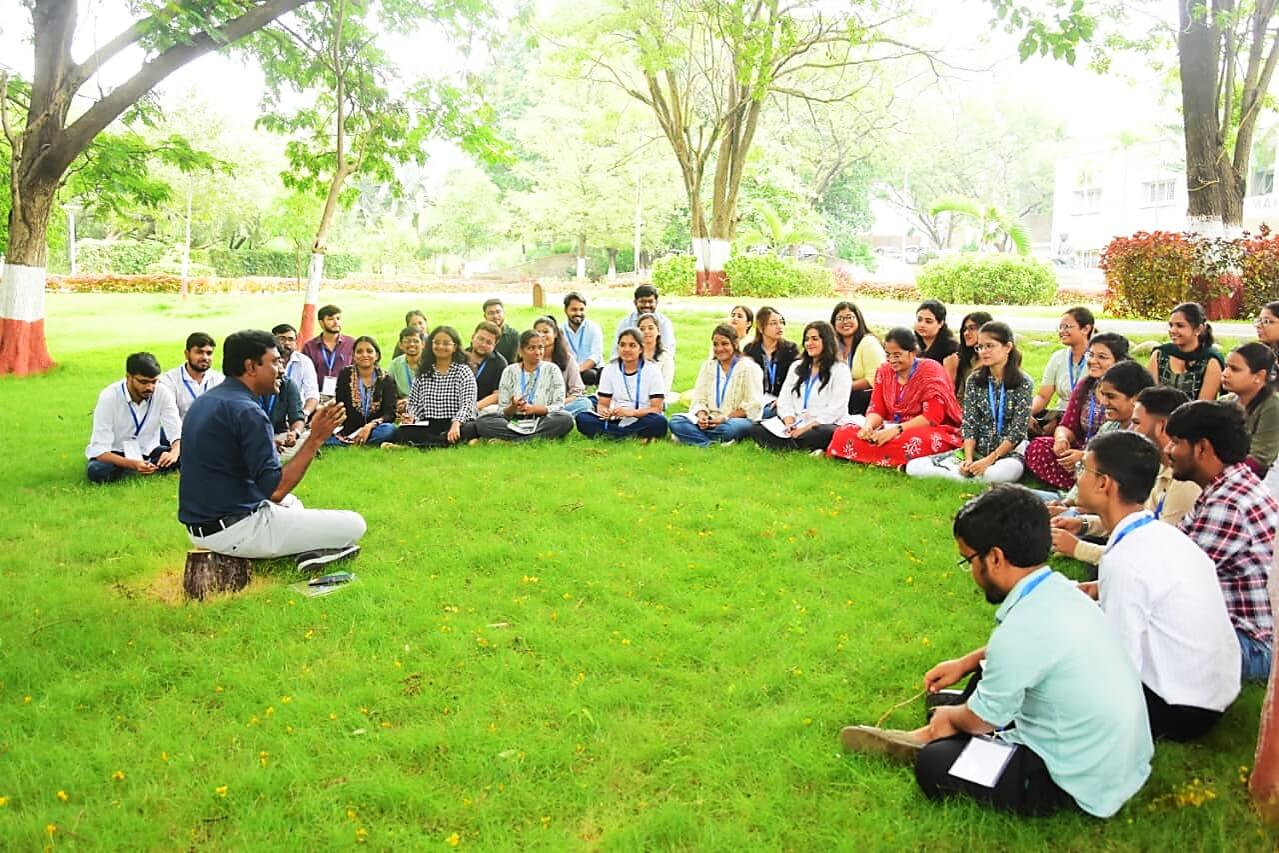
Learning Beyond the Research Methods
Some of the most valuable learning happened outside the formal sessions. Conversations with participants and experts exposed us to different research interests, perspectives and ways of approaching questions.
What stayed with us: Research grows not only through methods, but also through conversations and shared perspectives.
Research Should Not Begin After the Thesis
For a long time, we used to think that research papers were something we write after completing our MSc or PhD research. But one of the most valuable lessons we took away from this training was simple:
Why wait? Start writing from the beginning.
Research does not necessarily have to come only from your degree or thesis research. There is so much happening around us that can become an opportunity to learn, document and write.
A small field observation can become a case study.
An interesting experience can become a blog.
An emerging issue can be explored through a policy brief.
A practical problem can become the starting point for a small study.
Not everything has to immediately become a high-impact journal article.
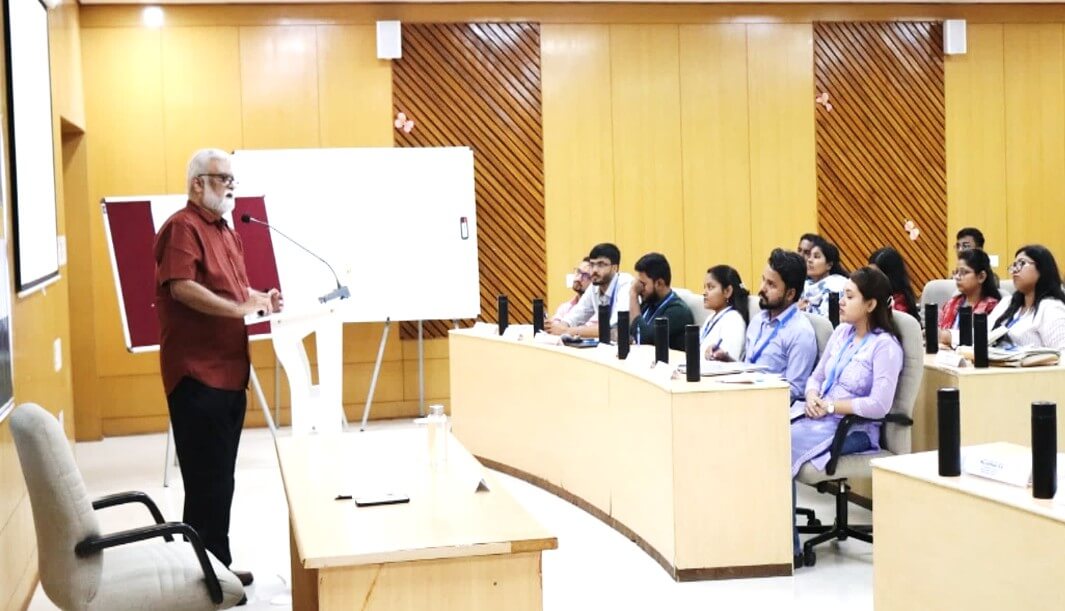
Sometimes, we simply need to write, practise, reflect and improve. The more we write, the more clearly we learn to organise our thoughts, analyse information and communicate our ideas. Writing should therefore not be treated only as the final product of research; it should be part of the research-learning process itself.
And then comes AI.
We also became more aware of how digital tools and AI are becoming part of the modern research ecosystem. What became particularly clear to us was that AI can complement research methodology, but it cannot replace researcher judgement, critical thinking, ethical responsibility or verification. The responsibility for framing the research question, evaluating evidence, interpreting findings and producing the final work remains with the researcher.
Initially, there can be a tendency to feel that using AI is somehow wrong, or that everything we produce must be completely independent of technology.
But perhaps the more important question is not: “Are we using AI?” It is: “Are we still learning?”
There is nothing wrong with using AI to improve our work, to correct language, refine sentences, structure our thoughts, identify gaps, brainstorm ideas or help us understand something better.
The concern begins when we stop thinking, analysing and learning for ourselves and simply ask AI to do the entire work.
AI can assist the process, but it should not replace the learning behind the process.
A SHIFT WITHIN US
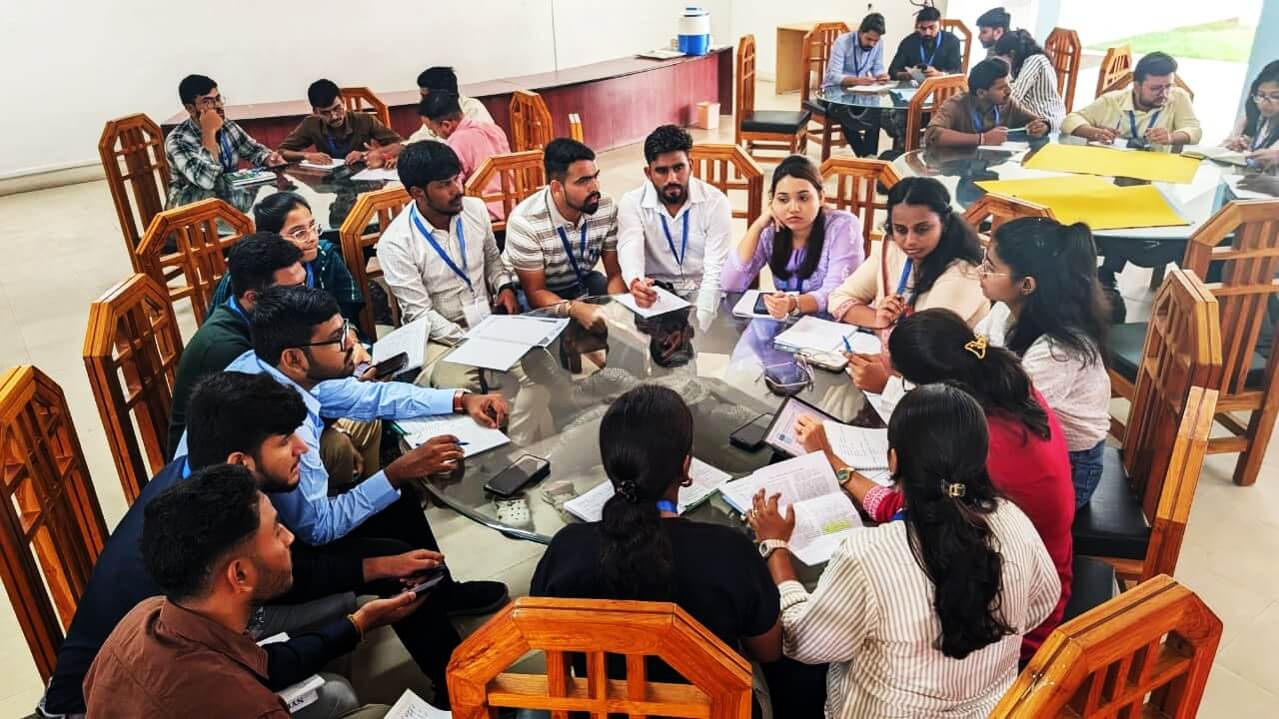
We feel that this programme changed something quite personal in us. One of the most important aspects was that many of the resource persons were not from an agricultural extension background, so we gained insights from experts from different domains. Also, this academic cross-pollination helped us break our rigidity in academic thinking, often resulting from institutional academic inbreeding.
Five days of learning, questioning and exploring research methodologies made us realise that we do not need to have everything figured out before we begin. We now feel more confident about entering the research space, not because we know everything, but because we have realised how much there is to explore. The biggest change was in how we see ourselves. We no longer see research as something we have to learn before becoming a researcher; we see it as a journey through which we will gradually become one.
What stayed with us: We came looking for research methods, but we returned with a clearer sense of the researcher we want to become.
HOW WE WILL CARRY THIS FORWARD
After NYPDP P.L.U.S., we want to carry forward the curiosity we developed during these five days. We know that there is still a lot we do not know, and perhaps that is what excites us the most. Instead of trying to become a researcher overnight, we want to keep learning, experimenting, writing and improving with every opportunity. We want our research to remain connected to real questions in Agricultural Extension while also being methodologically sound.
Our biggest takeaway is simple: Search more. Read more. Question more. Write more. Seek more. We joined this programme looking for direction, and we are leaving with the motivation to create that direction for ourselves- one paper, one question and one learning experience at a time.
What stayed with us: We do not have to know the entire path yet; we just need to keep moving, learning, and becoming ready for the path ahead.
FINAL THOUGHTS
NYPDP P.L.U.S. came at an important point in our journey and helped us see both what we know and how much more we have to learn. More than just research knowledge, it gave us the motivation to begin our journey towards becoming the researcher we hope to be, with curiosity, sincerity and purpose.
Acknowledgement
We are sincerely grateful to MANAGE, Hyderabad, Dr. Saravanan Raj, Director (Agricultural Extension), and the entire MANAGE team for this enriching learning experience.
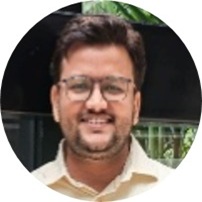 Parjanya Pavan is currently pursuing Ph.D. in Agricultural Extension Education at ICAR-Indian Agricultural Research Institute (IARI), New Delhi. He can be reached at parjanyapavan@gmail.com
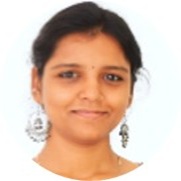 Dr. Sai Sreelekha Upadhyayula is currently working as Innovation Research Fellow at MANAGE-Fisheries Innovation and Startup Hub (MANAGE-FISHub), Hyderabad. She can be reached at usreelekha2299@gmail.com
 Yogesh B M is currently pursuing Ph.D. in Agricultural Extension Education at ICAR- Indian Agricultural Research Institute (IARI), New Delhi. He can be reached at yogi18bm@gmail.com
Add Comment