

In this good practice note, Sangappa, G Meghana, Dudekula Rafi and Tara Satyavathi discuss how integration of improved seed, scientific crop management practices, institutional support, and market linkages by the ICAR-Indian Institute of Millets Research (ICAR-IIMR), Hyderabad, in collaboration with Kusumagiri Farmers Producer Company Limited (KFPCL) enhanced productivity and profitability of millet cultivation among dryland farmers in Karnataka.
CONTEXT
Bombrahalli, in the Chitradurga district of Karnataka, is a rainfed, drought-prone village where finger millet (ragi) is the predominant crop. Farmers in the region have traditionally relied on locally available varieties and conventional broadcasting methods for cultivation. However, declining productivity, erratic rainfall, increasing cultivation costs, and limited access to remunerative markets have adversely affected the profitability and sustainability of millet farming. Conventional production practices were inadequate to address challenges posed by climate variability and rising production costs. Improving resilience and profitability of millet cultivation required access to climate-resilient varieties, scientific crop management practices, institutional support, and assured market linkages. To address these challenges, ICAR-IIMR, Hyderabad, in partnership with Kusumagiri Farmers Producer Company Limited (Box 1), introduced improved finger millet variety HR-13 during Rabi 2025. Intervention was complemented by technical guidance on improved production practices, regular field support, and facilitation of market linkages, enabling farmers to enhance productivity, increase income, and strengthen the sustainability of rainfed millet cultivation.
|
Box 1: Kusumagiri Farmers Producer Company Limited (KFPCL) |
GOOD PRACTICES
Introduction of HR-13 (A Climate Resilient Finger Millet Variety)
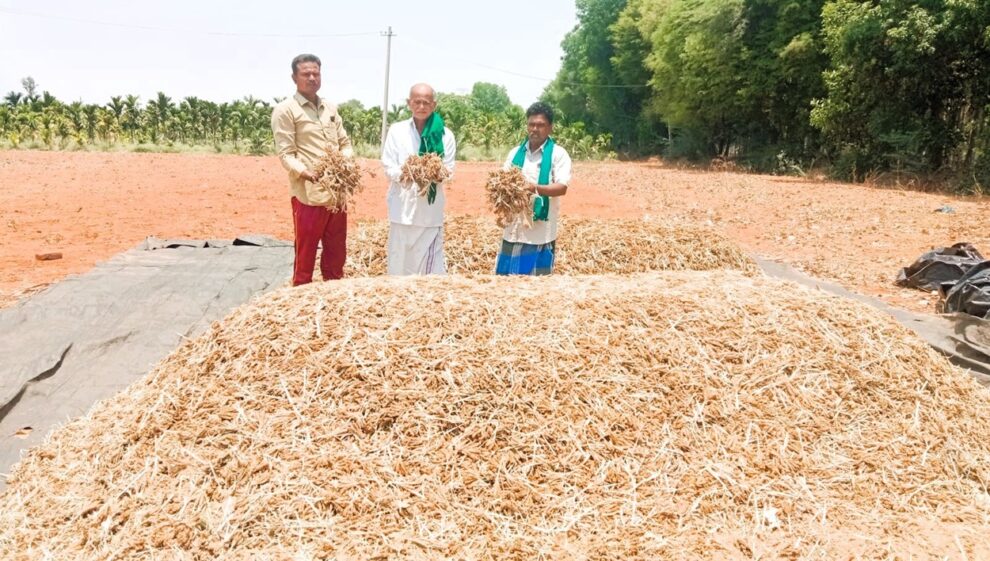
To improve the productivity of millet cultivation under dryland conditions, the ICAR-IIMR, in June 2025, introduced the improved finger millet variety HR-13 (Hagari Ragi-13) to Shri Chikkanna (a 72-year-old progressive farmer cultivating finger millet on six acres under rainfed conditions) through KFPCL. The variety demonstrated strong tillering ability, adaptability to moisture stress, and higher yield potential than traditional varieties. Quality seeds were supplied before the cropping season along with awareness programmes on scientific millet cultivation practices. The substantial increase in crop vigour and productivity motivated other farmers in nearby villages to adopt the variety more widely.
Participatory Field Demonstrations and Technical Handholding
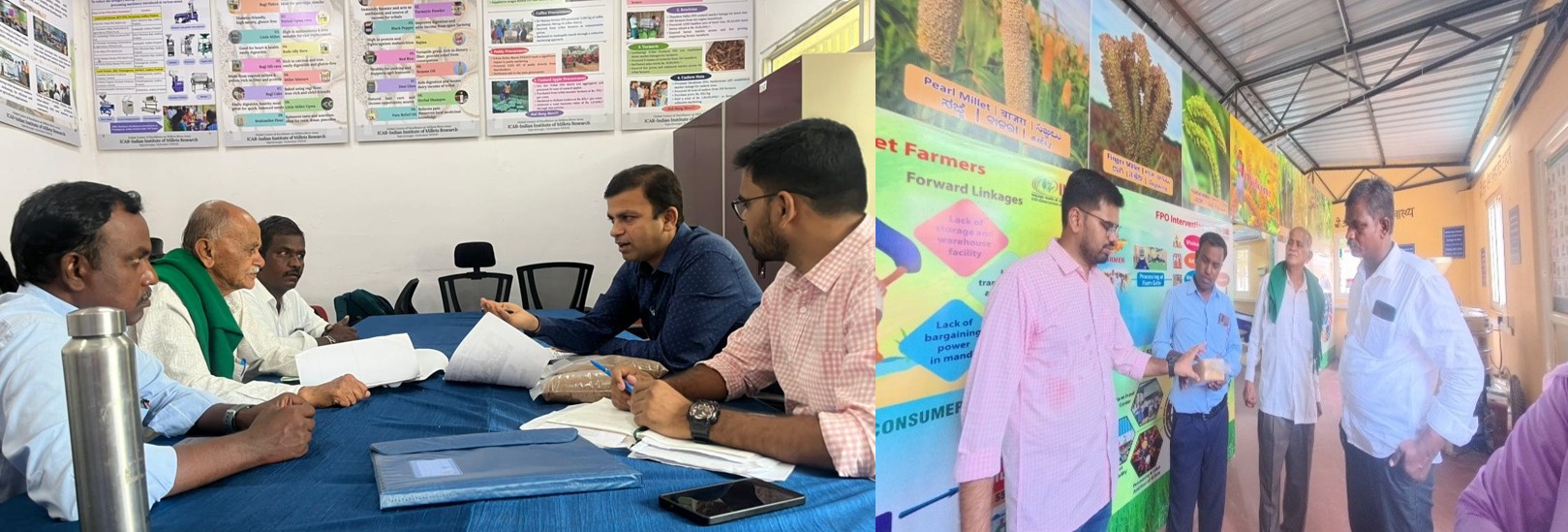
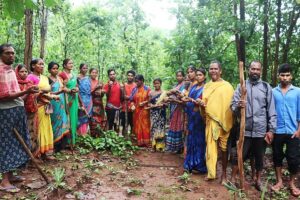
To ensure effective adoption of improved technologies, scientists and extension experts from ICAR-IIMR conducted field demonstrations, farmer interactions, and regular monitoring visits during June 2025. Farmers received practical training in transplanting methods, balanced nutrient application, intercultural operations, and scientific crop management practices suited to dryland conditions. Continuous interaction between scientists, FPO representatives, and farmers helped address field-level challenges such as moisture stress, weed management, nutrient management, and other crop production-related issues in real time. Through these participatory approaches, farmers gained confidence in adopting advanced millet cultivation practices. Field demonstrations and continuous technical support played an important role in overcoming farmer hesitation towards new technologies.
Promotion of Natural Farming for Sustainable Millet Production
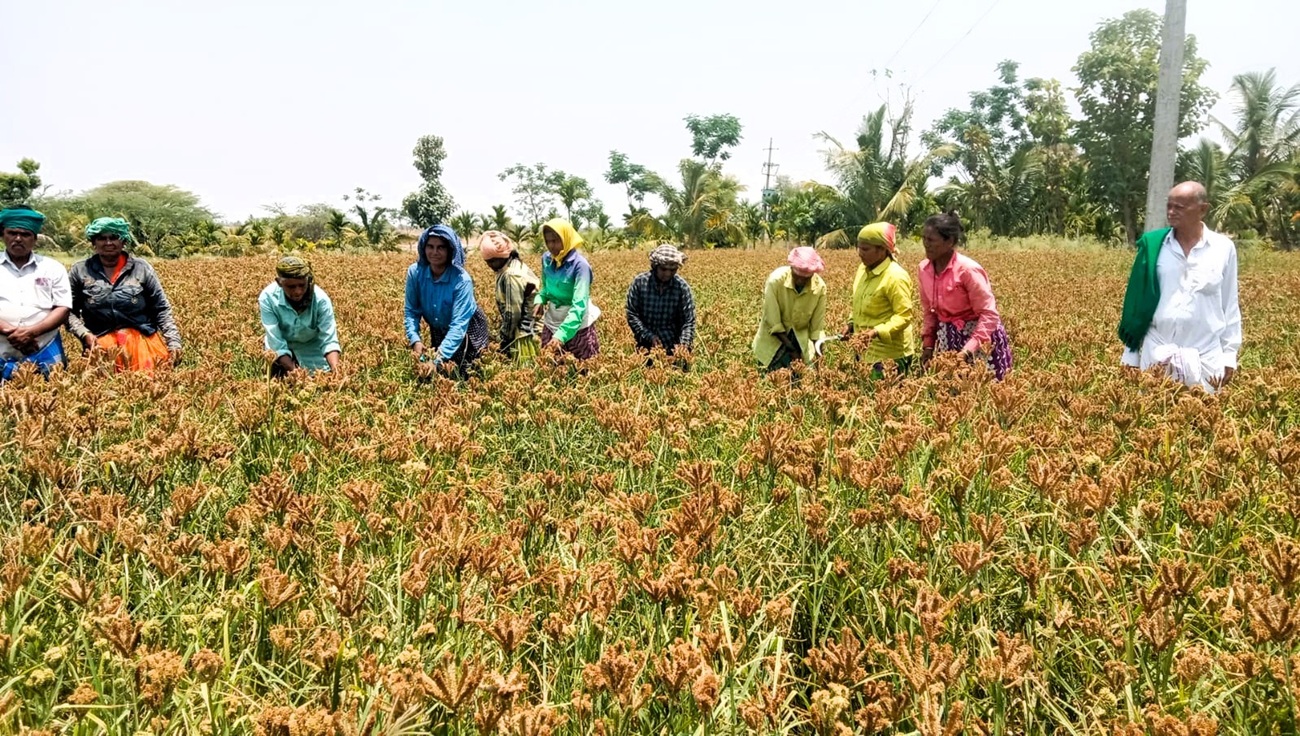
Along with improved variety promotion, ICAR-IIMR, Hyderabad encouraged farmers to adopt natural farming practices to reduce cultivation costs and improve soil health. During the pre-sowing period of the rabi season 2025-26, scientists and extension experts from ICAR-IIMR, Hyderabad, made regular field visits in the second week of each month and provided technical guidance throughout the crop period. The farmers were guided on eco-friendly crop management practices, use of locally available resources, soil health management, and other sustainable production practices at different crop growth stages. This regular field-level handholding continued from the pre-sowing stage until harvesting, enabling farmers to address crop management issues promptly and gain confidence in adopting natural farming practices. The integration of natural farming with improved millet cultivation enhanced sustainability and reduced dependence on chemical inputs. These practices improved resilience under dryland conditions and contributed to long-term soil productivity.
Strengthening Market Linkages through the FPO
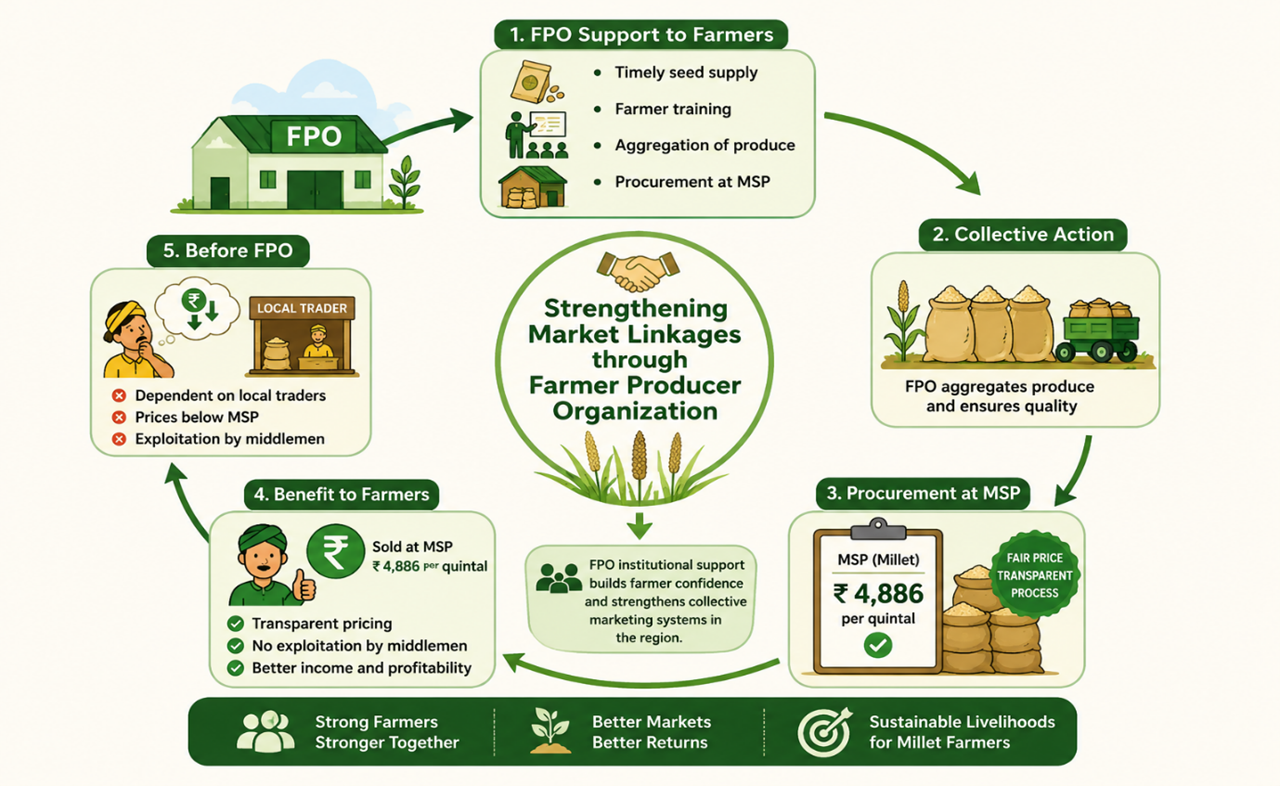
KFPCL played a crucial role in strengthening market access for millet farmers. During the rabi 2025–26 season, from crop establishment through harvesting and marketing, the FPO facilitated timely seed supply, farmer training, produce aggregation, and procurement at the Minimum Support Price (MSP). Earlier, farmers depended on local traders and often received prices below MSP. Through FPO support, farmers sold their produce at MSP of Rs. 4,886 per quintal, ensuring transparent pricing by eliminating exploitation by intermediaries. The institutional support of the FPO significantly improved farmer confidence and strengthened collective marketing systems in the region.
Continued Farmer Motivation & Recognition
Regular field visits, farmer meetings, and close interaction with scientists created strong trust between farmers and extension agencies. Successful farmers were encouraged to share their experiences through farmer meetings, field demonstrations, scientist–farmer interactions, and peer-to-peer discussions, helping neighbouring farmers understand the benefits of improved varieties and scientific crop management practices.
IMPACT
The adoption of HR-13, improved cultivation practices and assured market support through KFPCL has generated impact beyond individual farmers. In Bombrahalli, 38 out of 60 farmers are currently cultivating HR-13, covering about 200 acres. KFPCL has extended its outreach to 1,000 farmers across 142 villages and facilitated procurement of 143 quintals of ragi at Rs. 4,326/quintal, generating Rs. 6.18 lakh in MSP-based procurement value (Table 1).
The HR-13 variety demonstrated strong adaptability under dryland conditions and proved effective in improving climate resilience in millet farming systems. The integration of scientific crop management, natural farming, and institutional support strengthened sustainable agriculture practices in the region. Farmers became more confident in millet cultivation as a profitable and climate-resilient farming option.
Table 1: Impact from the interventions
| Impact Indicator | Achievement |
| Farmers adopting HR-13 in Bombrahalli | 38 of 60 |
| Area under HR-13 | 200 acres |
| KFPCL outreach | 1,000 farmers in 142 villages |
| Ragi procured at MSP | 143 quintals |
| Procurement value | Rs. 6,18,618 |
SUSTAINABILITY AND SCALING UP
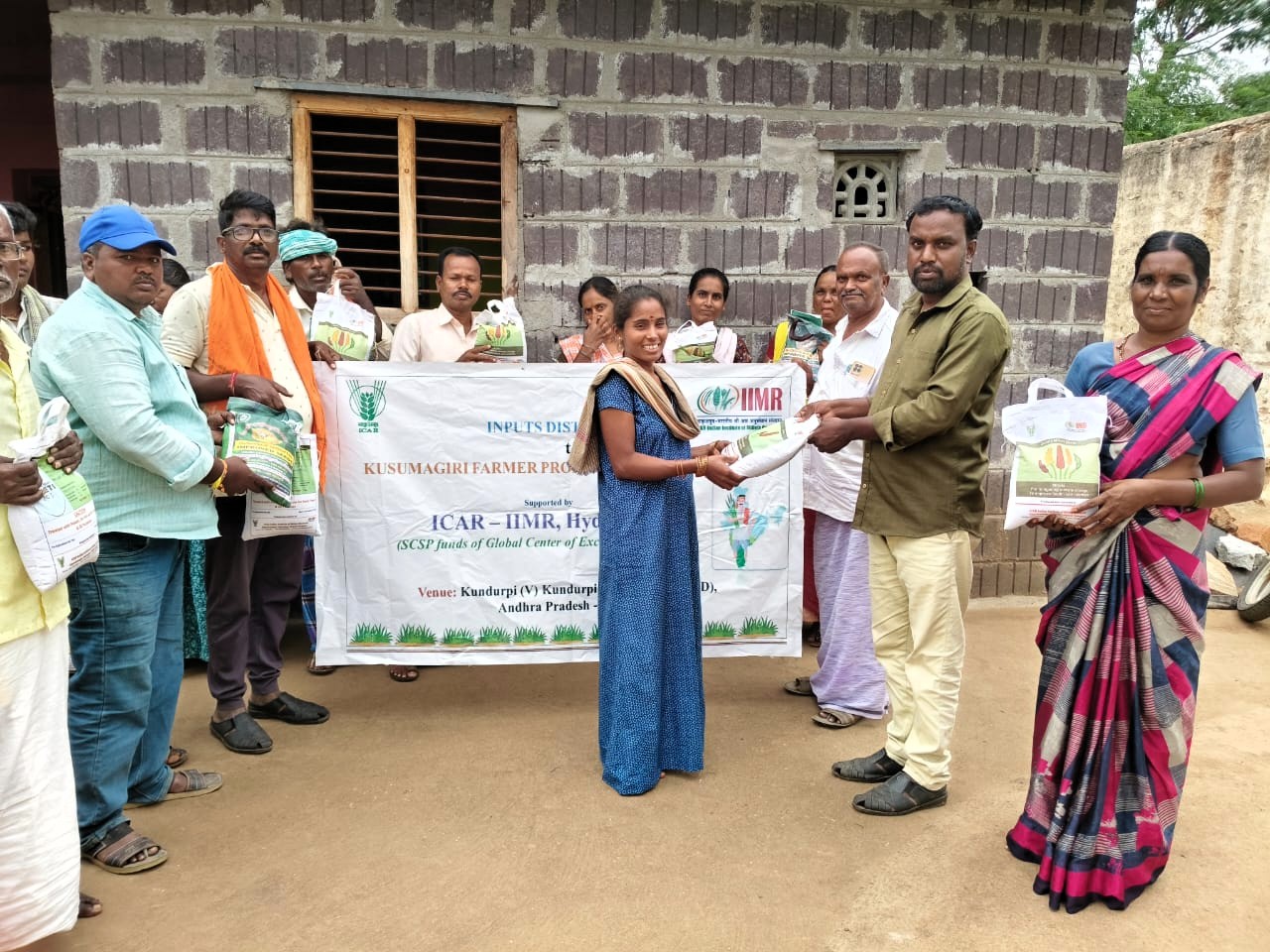
The experience of HR-13 adoption in Bombrahalli demonstrates that the sustainability of improved finger millet production depends not only on individual farmer adoption but also on the continued involvement of the Farmer Producer Organisation (FPO), local farmer networks, access to quality seed, technical support, and assured market linkages. The initial intervention with Shri K. Chikkanna created a demonstration effect, and the improved productivity observed under rainfed conditions encouraged interest among other farmers in the village and neighbouring areas. The intervention covered 38 farmers in Bombrahalli, providing an institutional base for wider dissemination of improved finger millet production practices. The participation of KFPCL in seed supply, farmer mobilisation, aggregation and market linkage provides an important mechanism for sustaining these activities beyond the period of direct technical intervention by ICAR-IIMR.
We believe that KFPCL will play a lead role in sustaining the intervention after the completion of direct field-level support from ICAR-IIMR. As a farmer-owned institution, the FPO can continue to facilitate access to quality seed, mobilise farmers for demonstrations and training, provide technical linkages, aggregate produce, and facilitate market access. The FPO’s existing activities in agricultural input supply, farmer capacity building, agroforestry, watershed management, millet-based value addition, and other livelihood initiatives provide opportunities to integrate improved millet production into its ongoing activities. This institutional ownership can help ensure that the technologies and practices promoted through the intervention continue to be used by farmers after the project support ends.
After the direct field intervention, ICAR-IIMR envisages KFPCL taking the lead in sustaining the promoted practices through farmer mobilisation, quality seed supply, aggregation and market linkages, with continued technical backstopping from ICAR-IIMR. The approach can be scaled to other rainfed millet-growing regions through participatory demonstrations, farmer capacity building, FPO-led interventions and convergence with KVKs and State Departments of Agriculture. Progressive farmers such as Shri K. Chikkanna (Box 1) can further support scaling through farmer-to-farmer learning and demonstration of improved technologies.
|
Box 1: Success Story of Shri K. Chikkanna 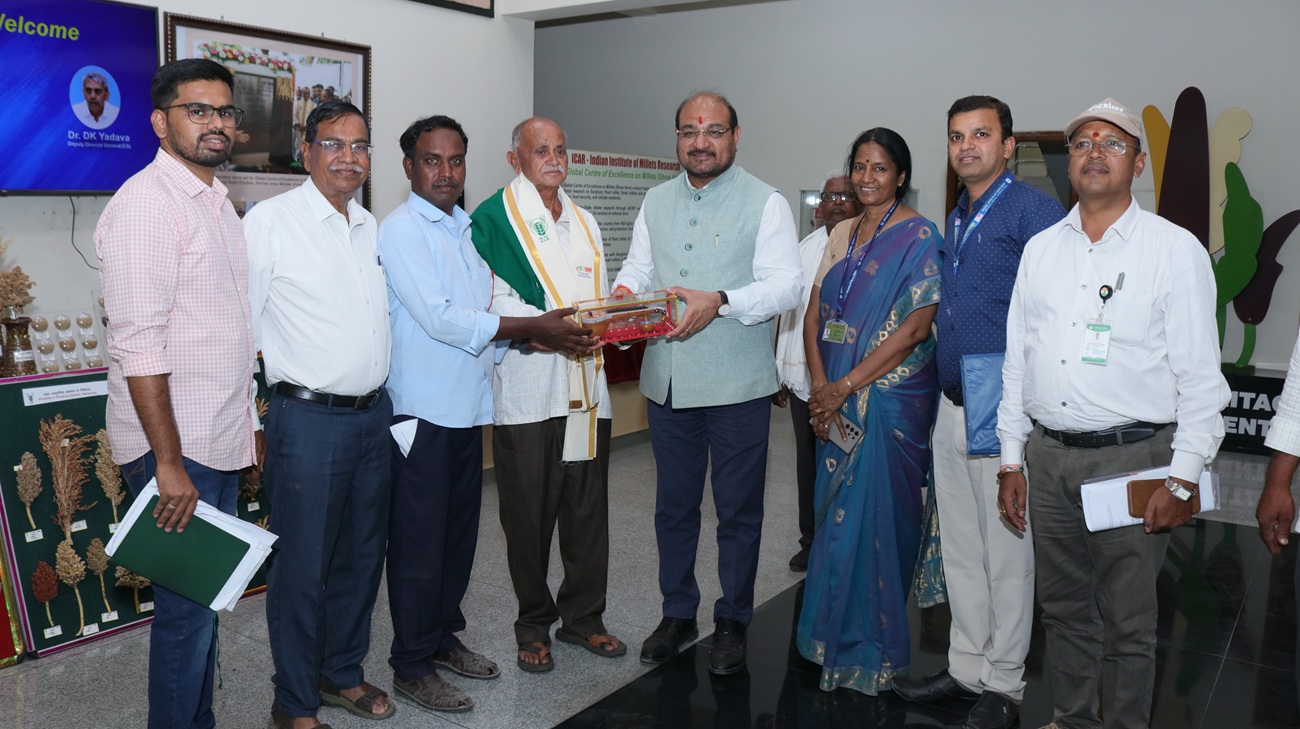 A major milestone in Shri Chikkanna’s journey was his felicitation by Dr M. L. Jat, Director General, ICAR and Secretary, DARE, at ICAR-IIMR, Hyderabad, on 6th May 2026, in recognition of his outstanding achievement in dryland ragi cultivation. On the occasion, Dr M. L. Jat appreciated the efforts of progressive millet farmers. He emphasised the importance of scientific interventions, improved varieties, and FPOs in promoting climate-resilient agriculture and strengthening rural livelihoods. Shri Chikkanna expressed gratitude to Dr C. Tara Satyavathi, Dr K. Srinivasa Babu, Dr Sangappa, and Dr Rafi for their continued technical guidance and support. He stated that the recognition motivated him to continue promoting millet cultivation among fellow farmers. |
CHALLENGES
Initial adoption of the improved HR-13 finger millet variety was constrained by farmers’ preference for traditional varieties, which were perceived to be better adapted to local conditions. Farmers were also uncertain about the adaptability, yield potential and economic benefits of the new variety. ICAR-IIMR addressed these concerns through participatory field demonstrations, regular scientist–farmer interactions and continuous technical guidance throughout the Rabi 2025–26 season, enabling farmers to observe the performance of HR-13 under local rainfed conditions. ICAR-IIMR facilitated access to quality seed and improved crop management practices, while KFPCL supported farmer mobilisation, aggregation, and market linkages. Continued farmer engagement and institutional support helped build confidence in the technology and encouraged its adoption among farmers. The experience indicates that overcoming initial hesitation requires not only demonstrating the performance of a new variety but also ensuring access to quality seed, technical support and reliable market opportunities.
LESSONS LEARNT
The experience demonstrated that successful adoption of improved millet technologies requires continuous farmer engagement rather than one-time interventions. Participatory demonstrations, regular field visits and timely technical guidance helped farmers gain confidence in HR-13 and improved production practices. The intervention also highlighted the important role of FPOs in sustaining the millet value chain through access to quality seed, farmer mobilisation, aggregation, and market linkages. Integration of improved varieties with scientific crop management and institutional support can enhance productivity and sustainability under rainfed conditions. For wider scaling, greater emphasis is needed on strengthening local seed systems, expanding participatory demonstrations, developing farmer champions and building convergence among ICAR institutes, KVKs, State Departments of Agriculture and FPOs. Such institutional linkages can support continued adoption and facilitate the replication of the approach in other rainfed millet-growing regions.
ACKNOWLEDGMENTS
ICAR-IIMR, Hyderabad gratefully acknowledges the cooperation of Shri K. Chikkanna and other millet farmers who participated in the intervention and shared their experiences. Appreciation is extended to Kusumagiri Farmers Producer Company Limited (FPO) for facilitating the distribution of quality seed, farmer mobilisation, aggregation, and market linkages. The contributions of the scientists of ICAR-IIMR, Hyderabad, in providing technical guidance, capacity building, and continuous field support are sincerely acknowledged.
 Dr Sangappa is a Scientist (Agricultural Extension) at ICAR-IIMR, Hyderabad. He has 12 years of experience in millet technology dissemination, FPO support, and institutional strengthening. He has played a key role in establishing CHCs and processing units, and in promoting millet farming, benefiting small farmers, particularly in tribal and NEH regions. He can be reached at sangappa@millets.res.in
 Ms G. Meghana is a Technical Specialist at ICAR-IIMR, Hyderabad. She focuses on FPO development, market strategies, and agribusiness promotion. With expertise in strengthening FPOs, supporting startups, and enhancing farmers’ market access, she facilitates buyer-seller interactions and promotes sustainable agricultural enterprises. She can be reached at gundala.meghana@gmail.com
 Dr Dudekula Rafi is a Research Associate & Agribusiness Expert at ICAR-IIMR, Hyderabad, and has 4 years of experience in agribusiness, value chains, and millet-based FPO promotion. He focuses on market linkages, gender studies, and capacity-building initiatives for farmers, startups, and agricultural officials. He can be reached at rafilucky34@gmail.com
 Dr C. Tara Satyavathi is a Director at ICAR–Indian Institute of Millets Research (ICAR–IIMR). She provides strategic leadership in millet research, technology development, and the promotion of sustainable millet-based agricultural systems. She has also played a key role in fostering institutional collaborations, supporting Farmer Producer Organisations (FPOs), promoting millet-based enterprises, and advancing national and international initiatives for enhancing food, nutrition, livelihood, and income security among farming communities. She can be reached at director.millets@gmail.com
Happy to see this good practice note as I have consumed Ragi a lot in my childhood, not due to its nutritional values or fancy but under compulsion! ????
Ragi was once grown extensively in my native state of Uttarakhand during my childhood in the 1960s, but its cultivation gradually declined over the years. With the renewed emphasis on millets for nutrition, climate resilience and sustainable agriculture, ragi deserves greater attention in Uttarakhand and other hill states. ICAR-VPKAS, Almora has developed improved ragi varieties suited to the hilly regions. The kinds of interventions suggested in this note like farmer demonstrations, technical support, institutional facilitation and stronger market linkages could perhaps help promote these varieties and revive ragi cultivation in the hills.