



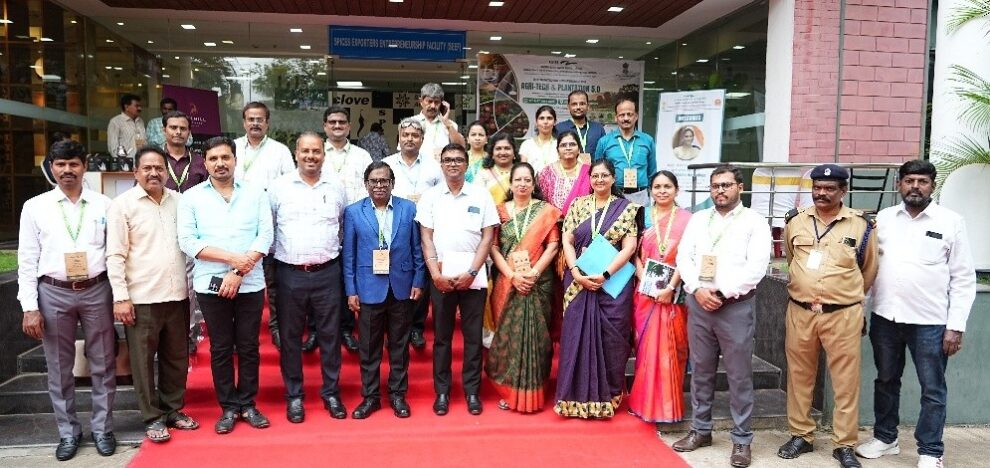
In this meeting note, Sahla and Shameena reflect on their participation in the International conference organised by IIPM Bengaluru.
CONTEXT
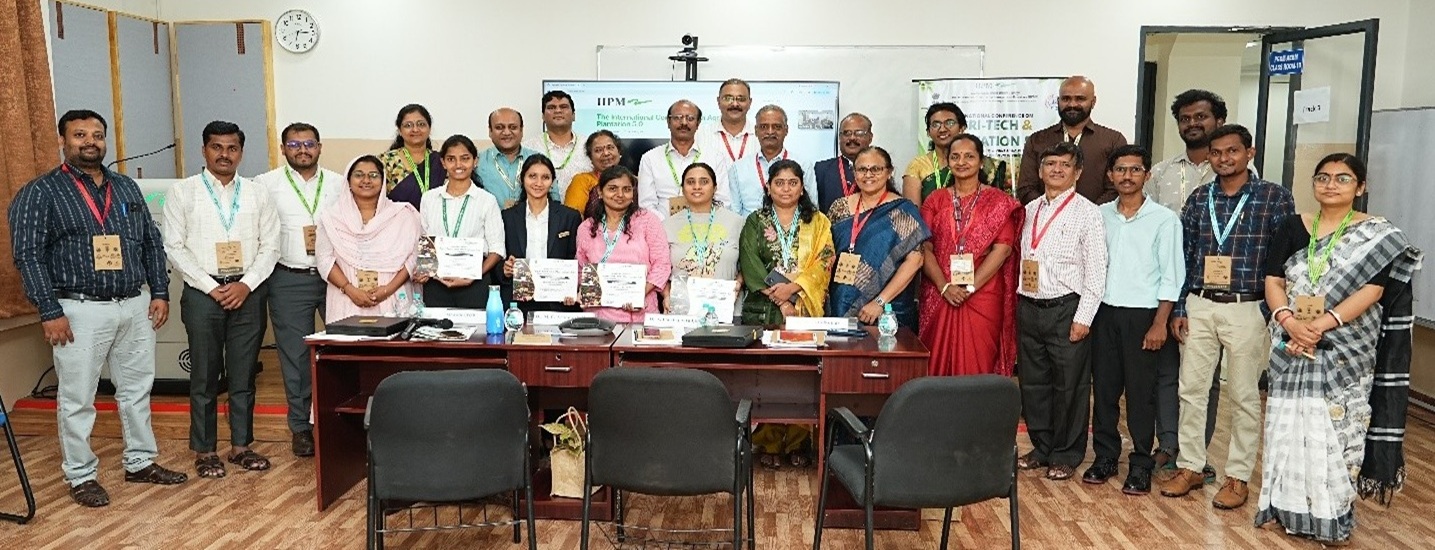
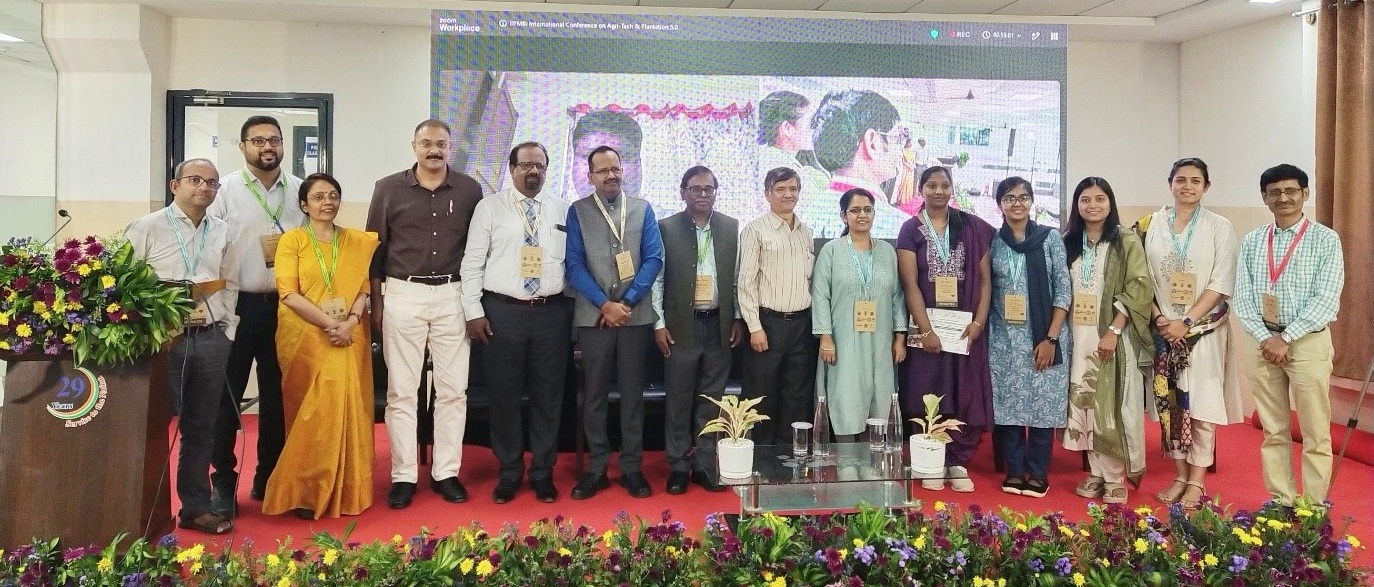
The IIPM International Conference on AgriTech and Plantation 5.0, themed “Innovations, Sustainability and Value Chain-Driven Business Strategies Shaping the Future of Agribusiness,” was held on 3-4 July 2026 at IIPM, Bengaluru, in collaboration with ICAR-CPCRI, ICAR-IIHR and ICAR-IISR, and in association with the Coffee, Tea, Rubber and Spices Boards. The conference brought together researchers, academicians, industry leaders, policymakers, entrepreneurs, extension professionals, and students to deliberate on emerging technologies, sustainability, and value chain development in the agriculture and plantation sectors. Through keynote addresses, technical sessions, panel discussions and research presentations, the conference facilitated knowledge exchange. It highlighted the importance of entrepreneurship-led extension, technology commercialisation, and stronger research–industry-farmer linkages for building resilient and future-ready agribusiness systems.
DIGITAL AGRICULTURE IS REDEFINING THE ROLE OF EXTENSION
A key message from the conference was that digital technologies are becoming integral to modern agriculture, with applications of AI, ML, IoT, blockchain, satellite monitoring, UAVs and decision-support systems. Presentations highlighted AI-powered advisory services, IoT-based farm advisories, satellite-enabled crop monitoring and AI-driven yield forecasting. However, the discussions emphasised that technology alone cannot transform agriculture; farmers need digital literacy, trust, timely advisory support and institutional guidance. Agricultural extension professionals will therefore continue to play a crucial role as facilitators who help farmers interpret digital information and make informed decisions. The conference also highlighted the growing importance of data science, digital traceability and remote sensing, underscoring the need for future extension professionals to develop skills in digital literacy, data interpretation, systems thinking and interdisciplinary collaboration.
SUSTAINABILITY IS NOW EMBEDDED IN AGRICULTURAL INNOVATION
A second major learning from the conference was that sustainability is no longer viewed as a separate agenda; rather, it has become the foundation upon which agricultural innovations are being developed. This was evident across presentations on climate-resilient farming, integrated nutrient management, biological innovations, soil health, sustainable pest management, resource-use efficiency, pollination services, biochar applications and environmentally sustainable production systems. An important takeaway for agricultural extension is that:
- Future advisory services must move beyond recommending individual technologies
- Farmers increasingly require integrated solutions that simultaneously improve productivity, reduce environmental impacts, enhance resilience to climate variability and strengthen farm profitability
- Extension systems need to promote holistic farming approaches that combine technological innovation with ecological sustainability
- Long-term agricultural development depends on balancing economic, environmental and social objectives
FROM PRODUCTION TO VALUE CHAINS: A NEW DIRECTION FOR AGRICULTURAL EXTENSION
Another recurring theme throughout the conference was the growing recognition that agricultural development can no longer be viewed solely through the lens of production. Several presentations focused on digital traceability, FPOs, blockchain-enabled supply chains, ethical sourcing, e-commerce, digital marketing, GI products, food processing, value addition, market governance, and consumer trust. Collectively, these presentations conveyed a clear message: improving production alone is insufficient unless farmers are effectively connected to markets and receive fair value for their produce. This shift has important implications for agricultural extension. Traditionally, extension personnel have concentrated on increasing crop yields through improved technologies and recommended practices. However, emerging market realities demand that extension professionals also help farmers understand quality standards, branding, certification, aggregation, processing, digital marketing, and market intelligence. Strengthening value chains requires close collaboration among researchers, extension agencies, agribusiness firms, FPO’s, financial institutions and policymakers.
- Extension therefore needs to function as a facilitator that helps farmers navigate increasingly complex value chains while ensuring that innovations translate into tangible economic benefits
ENTREPRENEURSHIP IS EMERGING AS A CORE FUNCTION OF EXTENSION
One of the most encouraging observations during the conference was the increasing emphasis on entrepreneurship as an integral component of agricultural development. Across various sessions, presenters discussed agribusiness incubation, technology commercialisation, entrepreneur-led extension, startup ecosystems, plantation entrepreneurship, digital business models and innovation-driven enterprises. These discussions reflected a growing recognition that innovation reaches farmers more effectively when entrepreneurial initiatives translate research outputs into practical solutions. For agricultural extension professionals, this represents a significant transition. Extension has traditionally focused on promoting the adoption of technologies developed by research institutions. Increasingly, however, extension must also encourage entrepreneurial thinking among farmers, rural youth and agripreneurs. This involves helping individuals identify business opportunities, access incubation support, build market linkages and develop sustainable enterprises based on agricultural innovations. Such an approach not only strengthens rural livelihoods but also creates pathways for technology commercialisation and employment generation.
- Future extension professionals will require competencies that extend beyond communication and technology transfer to include business facilitation, networking, digital innovation and ecosystem building
CONSUMERS ARE INCREASINGLY SHAPING AGRICULTURAL RESEARCH
Another interesting feature of the conference was the growing attention given to consumers and food systems. Several presentations explored topics such as functional foods, plant-based proteins, food waste reduction, consumer attitudes, sustainable eating behaviour, food labelling, organic food purchasing and food safety. While these subjects may initially seem distant from agricultural extension, they clearly showed how consumer preferences increasingly influence agricultural production, processing, and marketing decisions. This changing landscape highlights the need for extension systems to understand better evolving consumer expectations. Farmers today must produce not only higher quantities but also products that meet standards for nutrition, sustainability, traceability, food safety, and quality.
- Extension therefore has an important role in communicating market signals to producers while simultaneously helping consumers appreciate sustainable agricultural practices and responsible food consumption
- In this sense, extension becomes a bridge connecting producers, processors, markets and consumers within an integrated agrifood system
KEY TAKEAWAYS FOR AGRICULTURAL EXTENSION PROFESSIONALS
- Future agricultural extension systems will increasingly function as innovation ecosystems
- Extension professionals will need to connect researchers, farmers, entrepreneurs, agribusiness firms, Farmer Producer Organisations (FPOs), financial institutions and policymakers to facilitate innovation and create value across the agricultural system
- Digital technologies may significantly improve access to information, but they cannot replace the trust, contextual understanding and human interactions that extension professionals bring to farming communities
- Sustainability must underpin every agricultural innovation
- Productivity gains should be pursued alongside climate resilience, environmental conservation and efficient resource management
- Extension should move beyond production-centric approaches
- Greater emphasis is needed on value addition, market access, Farmer Producer Organisations, branding and supply chain development
- Future extension professionals must develop competencies in digital agriculture, data interpretation, innovation facilitation, market intelligence and systems thinking
- Addressing contemporary agricultural challenges requires collaboration among agricultural scientists, engineers, economists, extension professionals, data scientists and industry stakeholders
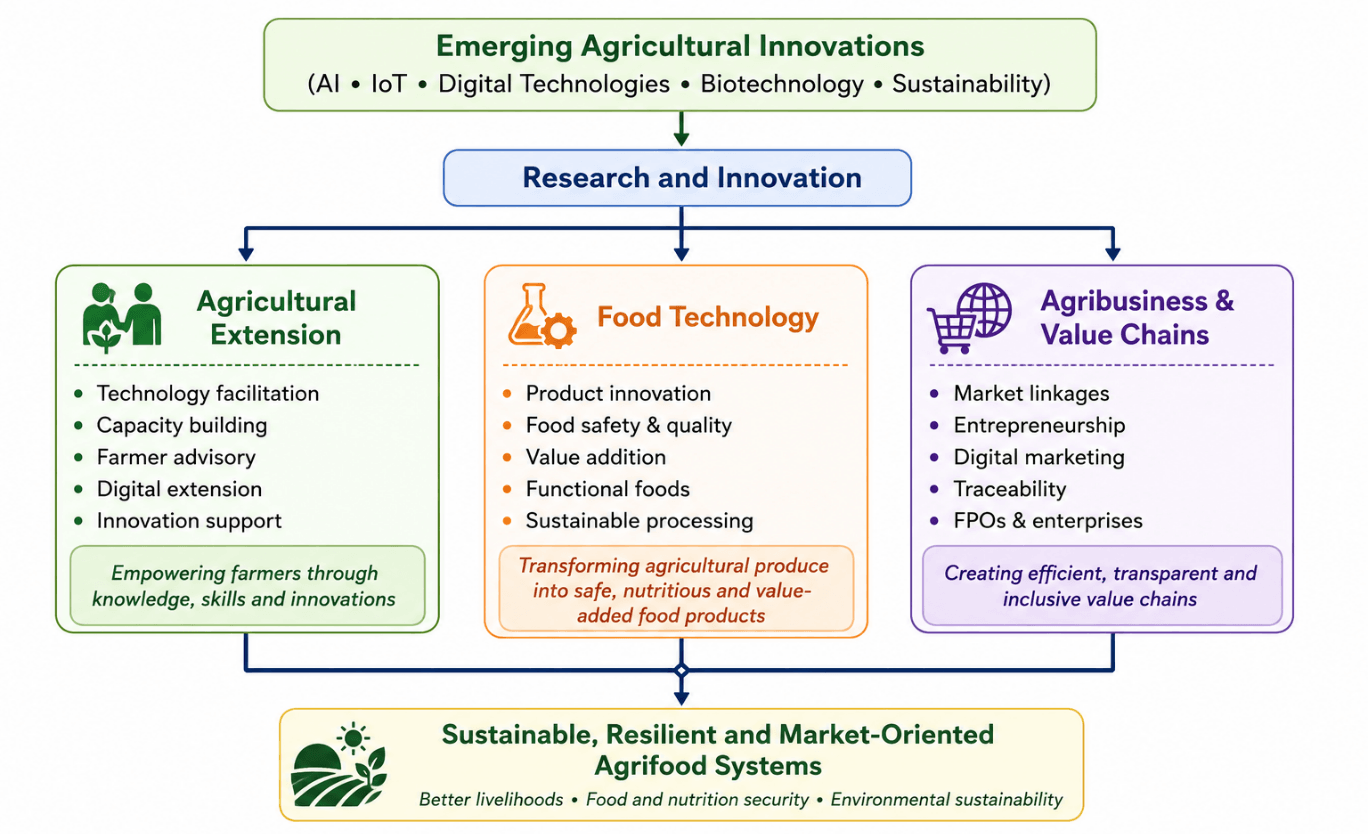
IMPLICATIONS FOR FOOD TECHNOLOGY AND SUSTAINABLE AGRIFOOD SYSTEMS
- Food technologists have an increasingly important role beyond product development by contributing to sustainable value chains, entrepreneurship and market-oriented innovations that benefit both producers and consumers
- Future food innovations should balance nutrition, health, food safety, consumer expectations, affordability and environmental sustainability rather than focusing on a single product attribute
- Digital technologies, including AI, IoT, blockchain and data analytics, are emerging as valuable tools for improving food quality, traceability, process optimisation and supply chain transparency
- Greater emphasis should be placed on value addition through underutilised crops, processing by-products and functional ingredients, creating opportunities for circular bioeconomy and improved farmer incomes
- Consumer-centric innovation should drive product development, with greater emphasis on sensory quality, clean-label products, plant-based foods, sustainable packaging and responsible consumption
- Food safety and quality assurance should increasingly integrate advanced analytical techniques, predictive risk assessment and digital traceability to strengthen consumer confidence and regulatory compliance
- Collaboration among food technologists, agricultural scientists, engineers, economists, entrepreneurs, policymakers and industry is essential to develop scalable, sustainable and market-ready food innovations
- Extension systems can play an important role in promoting the adoption of food processing technologies, strengthening post-harvest management, supporting value addition and creating stronger market linkages for farmers and food entrepreneurs
CONCLUSION
The International Conference on AgriTech & Plantation 5.0 provided much more than an opportunity to learn about emerging technologies. It offered a valuable platform to understand how agriculture is being transformed through the convergence of digital innovation, sustainability, entrepreneurship, consumer-driven markets and value chain integration. The conference demonstrated that future agricultural development will depend not only on scientific discoveries but also on effective institutional support, interdisciplinary collaboration and responsive extension systems capable of translating knowledge into practical solutions. The knowledge gained, interactions with researchers from diverse disciplines and exposure to emerging innovations have provided fresh perspectives that will inform our research and future professional contributions. More importantly, the conference reaffirmed our belief that agricultural extension will continue to play a pivotal role in ensuring that technological advancements translate into inclusive, sustainable and farmer-centred agricultural development.
 Sahla Salam is currently pursuing a PhD in Agricultural Extension Education at the GKVK Campus, University of Agricultural Sciences, Bangalore. She can be reached at salamsahla422@gmail.com
 Dr Shameena Beegum P. P. is a Senior Scientist (Food Technology) at ICAR-Indian Institute of Spices Research, Calicut, Keralam. She can be reached at shameena.pht@gmail.com
Add Comment